
There is nothing quite like summer in Moab. While most people see the gathering dark clouds of a monsoon storm and head indoors, landscape photographers do the exact opposite. We grab our gear and run toward the chaos.
The American Southwest completely transforms during a summer storm. The smell of rain on hot sandstone, the dramatic drop in temperature, and the intense contrast of bruised, purple skies against vibrant red rock create a canvas you simply can't find at any other time of year. If you are willing to chase the storm, you can capture images with a level of mood and drama that ordinary golden hour light just can't match.
From hidden reflection pools to vast canyon rims, here are my favorite spots around Moab to photograph summer monsoon storms.
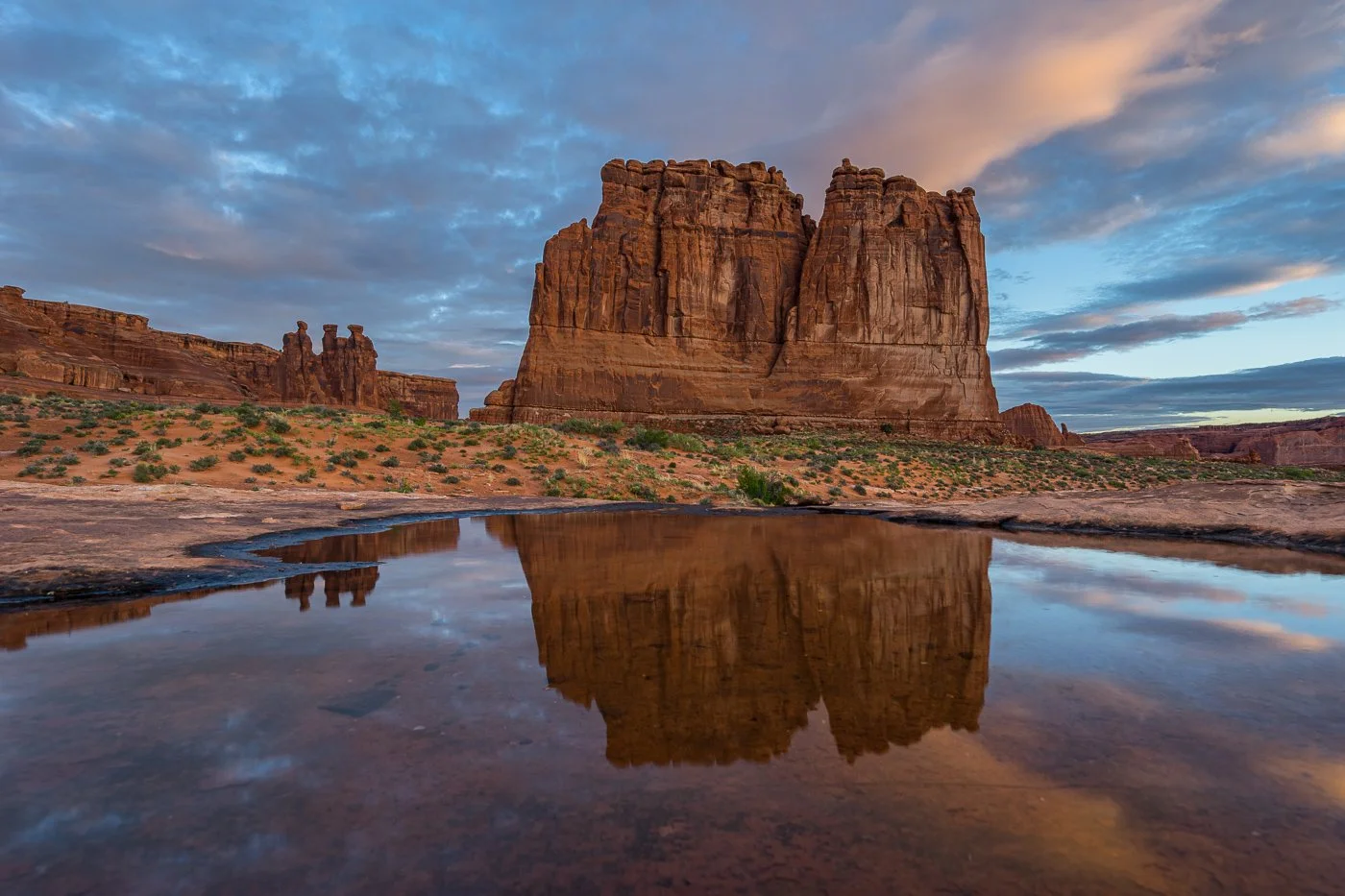
Early morning magic in the desert. The towering monoliths of Courthouse Towers catch the soft glow of sunrise as a still rain-pothole acts as a perfect natural mirror, duplicating the pastel skies and rugged desert geology below.
1. Lower Park Avenue (Arches National Park)
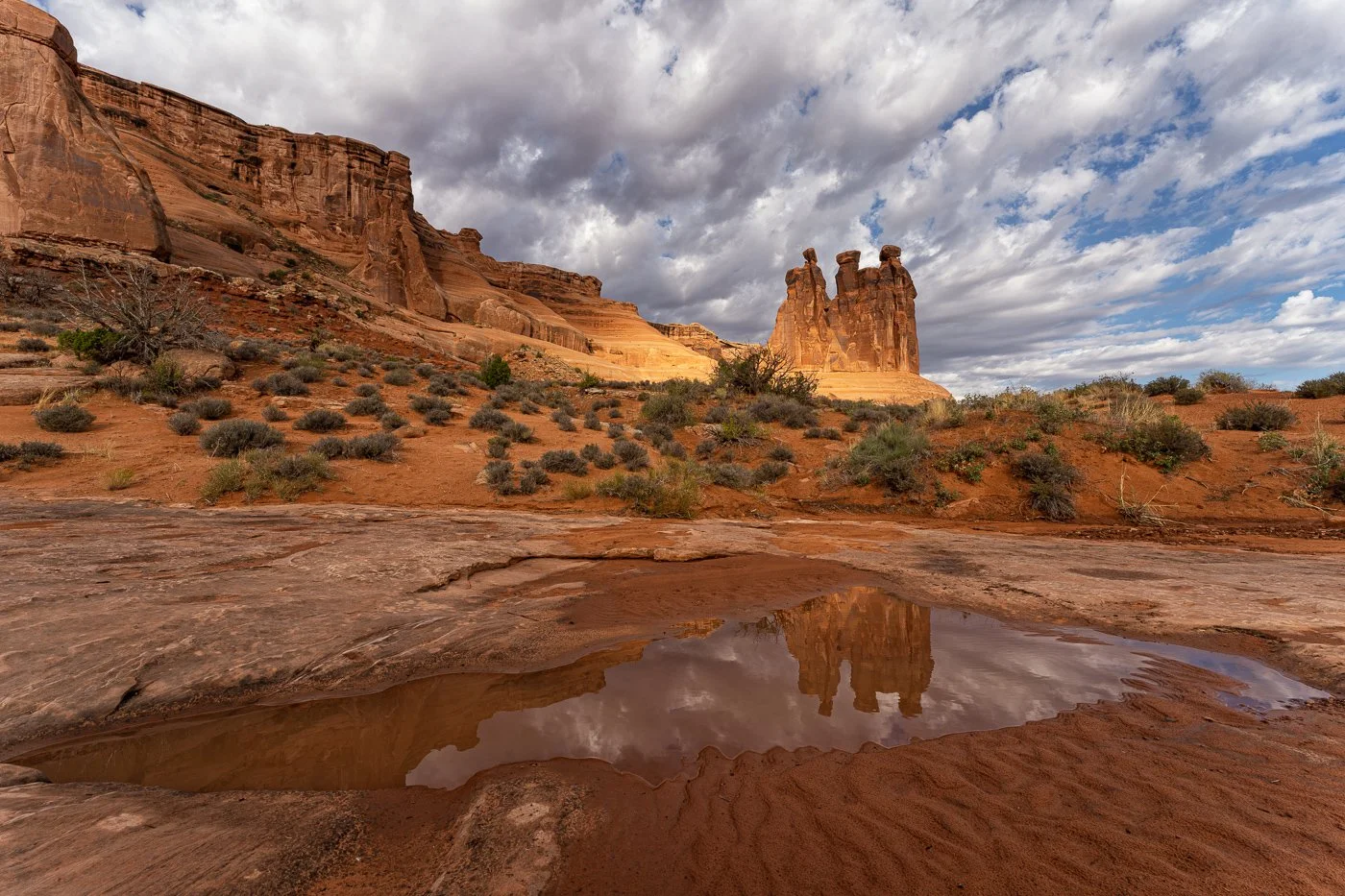
If you want immediate dramatic impact without a grueling backcountry hike, head to lower Park Avenue. The towering monoliths and sheer sandstone walls resemble a canyon version of a city skyline, and when a monsoon hits, this iconic location goes from spectacular to otherworldly.
The Reflection Pools: Lower Park Avenue features dozens of natural potholes carved into the slickrock. Following a heavy downpour, these basins fill with water, transforming into pristine, glass-like mirrors. Position your camera low to the ground to capture iconic monoliths like the Three Gossips, the Tower of Babel, and The Organ perfectly reflected in the water. You’ll need a tripod that gets very low to the ground. My choice? The Peak Design Pro Tripod, which sets up easily at just inches off the ground.
Endless Compositions: Because of the way the giant fins and towers align, your composition options here are virtually limitless. You can shoot wide to capture the scale of the entire canyon under a dark cloud, or use a telephoto lens to isolate interesting details in the landscape.
The Dynamic Wash: If you time it exactly right immediately following a storm, the dry wash at the bottom of the canyon can come alive with flowing water. Capturing movement in a place that is usually bone-dry adds a rare storytelling element to your images. Using a solid neutral density filter on your lens will extend the shutter speed, giving the flowing water a silky smooth texture. I only use Breakthrough filters, including their X2 6 stop ND.
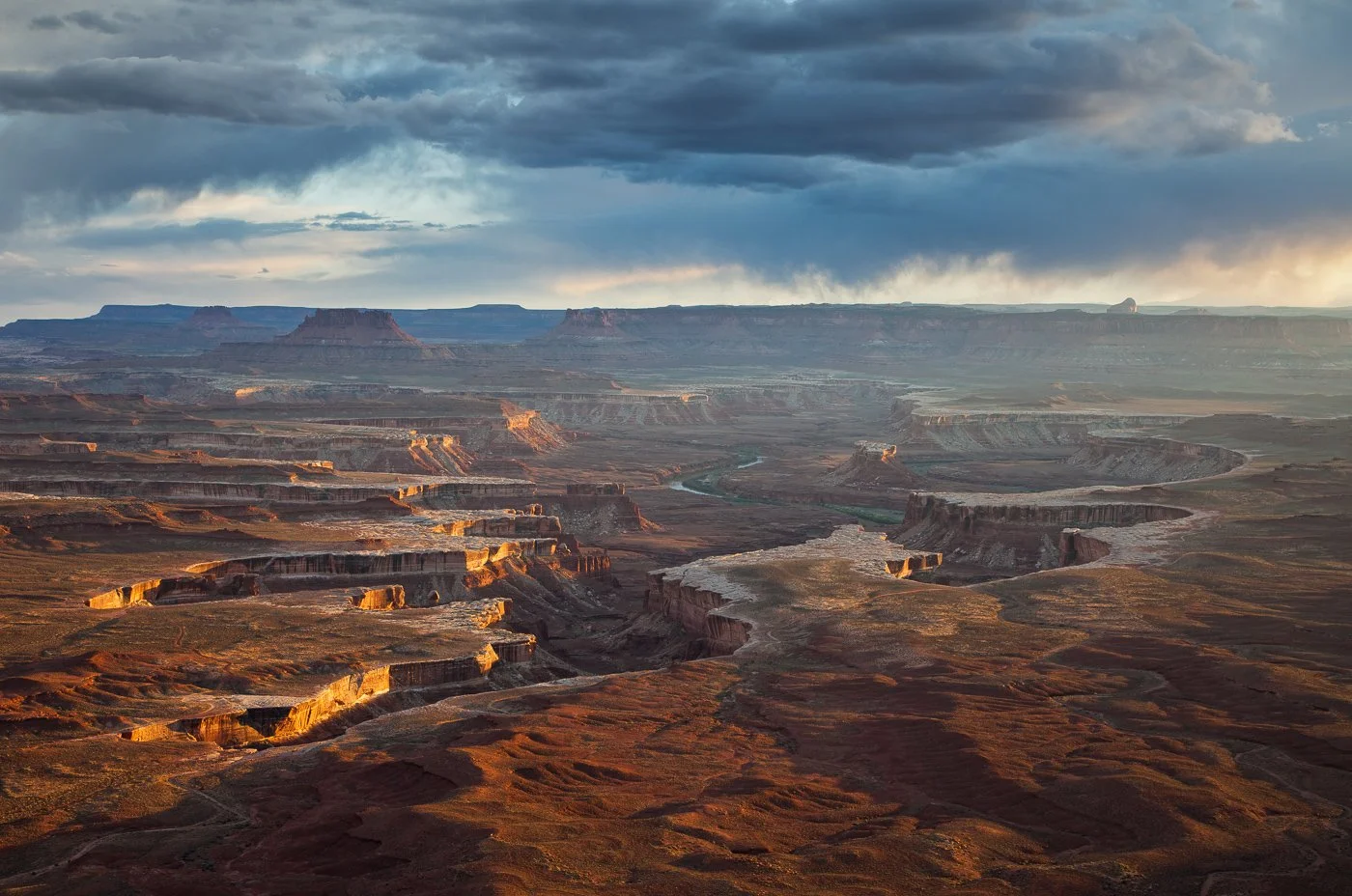
Nothing beats the high-contrast drama of a desert storm at sunset. Looking out from Green River Overlook in Canyonlands, the setting sun breaks through heavy, brooding clouds to light up the labyrinth of canyons below, highlighting the incredible depth and raw scale of the Island in the sky district.
2. Green River Overlook (Canyonlands National Park)
For pure, big-sky drama at sunrise or sunset, the Green River Overlook in the Island in the Sky district is legendary. This vantage point gives you an unobstructed view of the vast plateau deeply chiseled by the river below.
Unrivaled Storm Light: The massive panoramic view here means you can watch dramatic skies produce sweeping storm light across the landscape. The interplay of light and shadow sweeping over the canyon floors gives the entire scene significantly more visual interest than during the dry months.
Catching the Transitions: This location shines brightest just as storms are approaching or clearing. The breaking clouds can create spotlight effects on the canyon rims while the rest of the landscape remains bathed in moody blues and purples.
A Quick Safety Reminder: Because you are standing high on an exposed mesa rim, it is absolutely crucial to be lightning safe. Keep an eye on the sky, track how close the cells are, and be ready to retreat to your vehicle if lightning starts striking nearby.
Gear Recommendations: To capture this massive landscape, you’ll be best served using an ultra-wide lens like a 14-24mm if you want to include foreground elements such as interesting rock formations or juniper trees. A 24-105mm lens is always a good option here as it allows you to shoot wide landscapes or zoom in on interesting features in the canyon below.
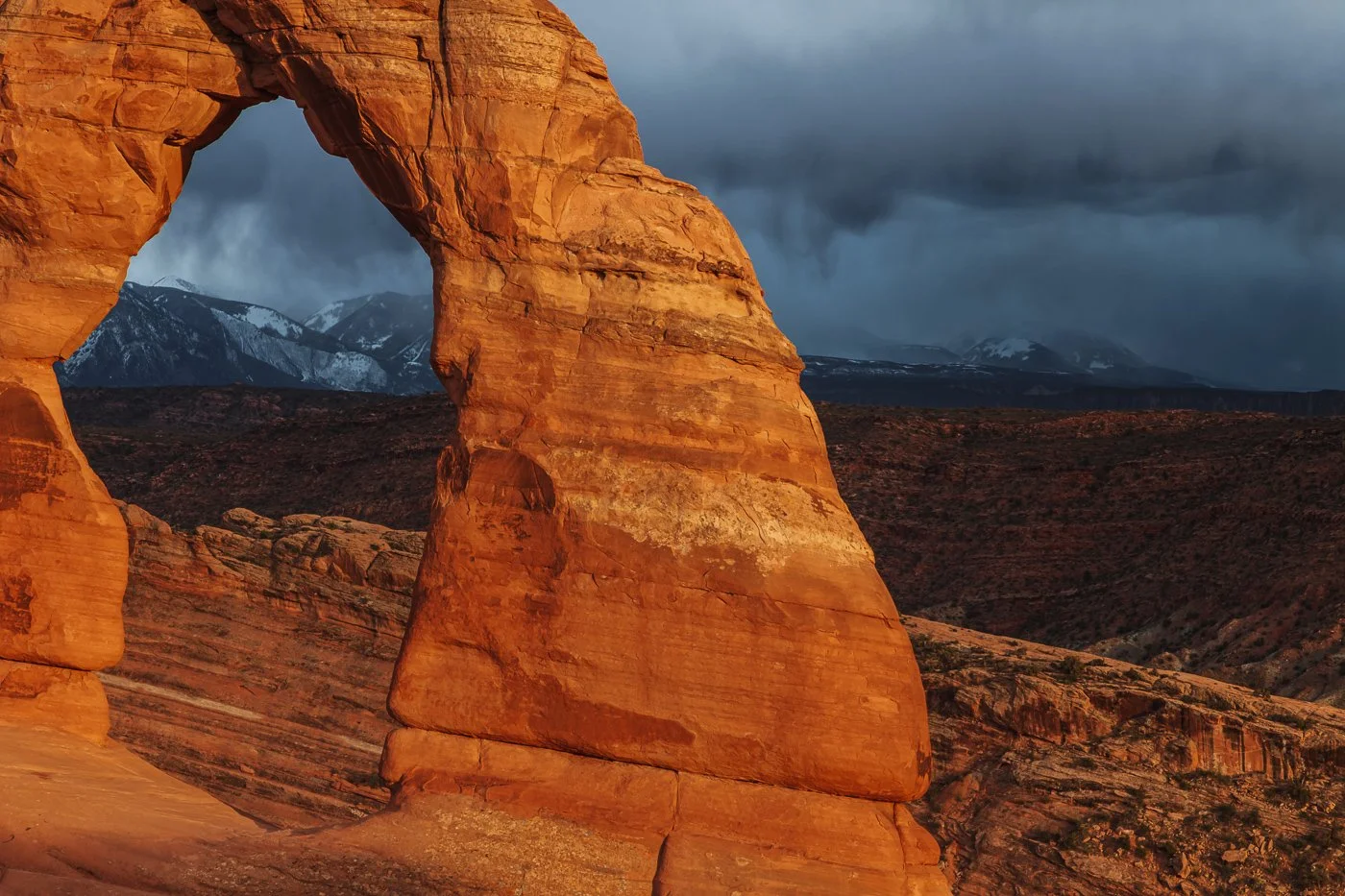
A tightly composed frame of Delicate Arch captures a masterclass in color contrast. The warm, radiant orange of the Entrada sandstone pops vividly against a deep, moody storm sky, while the snow-dusted La Sal Mountains peek through the arch's opening to perfectly frame the rugged spirit of Moab.
3. Delicate Arch (Arches National Park)
Photographing Delicate Arch at sunset is a bucket-list experience, but doing it during a summer monsoon elevates it to a whole new level.
Ditching the Crowds: Delicate Arch is notoriously busy, but a threatening storm has a magical way of clearing out the crowds. You will often find the slickrock bowl far less packed when stormy weather rolls in.
The Perfect Backdrop: Instead of a bald, clear sky, a monsoon brings dark, textured clouds that fill the negative space above the arch and frame the distant La Sal Mountains beautifully.
Slickrock Reflections: Just like Park Avenue, the giant slickrock bowl directly below the arch features natural potholes that collect rainwater. Getting down low allows you to mirror the arch in the water, a shot that is impossible most of the year.
Gear Recommendations: To capture the arch, the reflection pool, and the massive storm clouds all in one frame, an ultra-wide lens like a 14-24mm is your best friend. For tighter, more compressed compositions of the arch against the mountains, a versatile 24-105mm or 28-200mm works wonderfully.
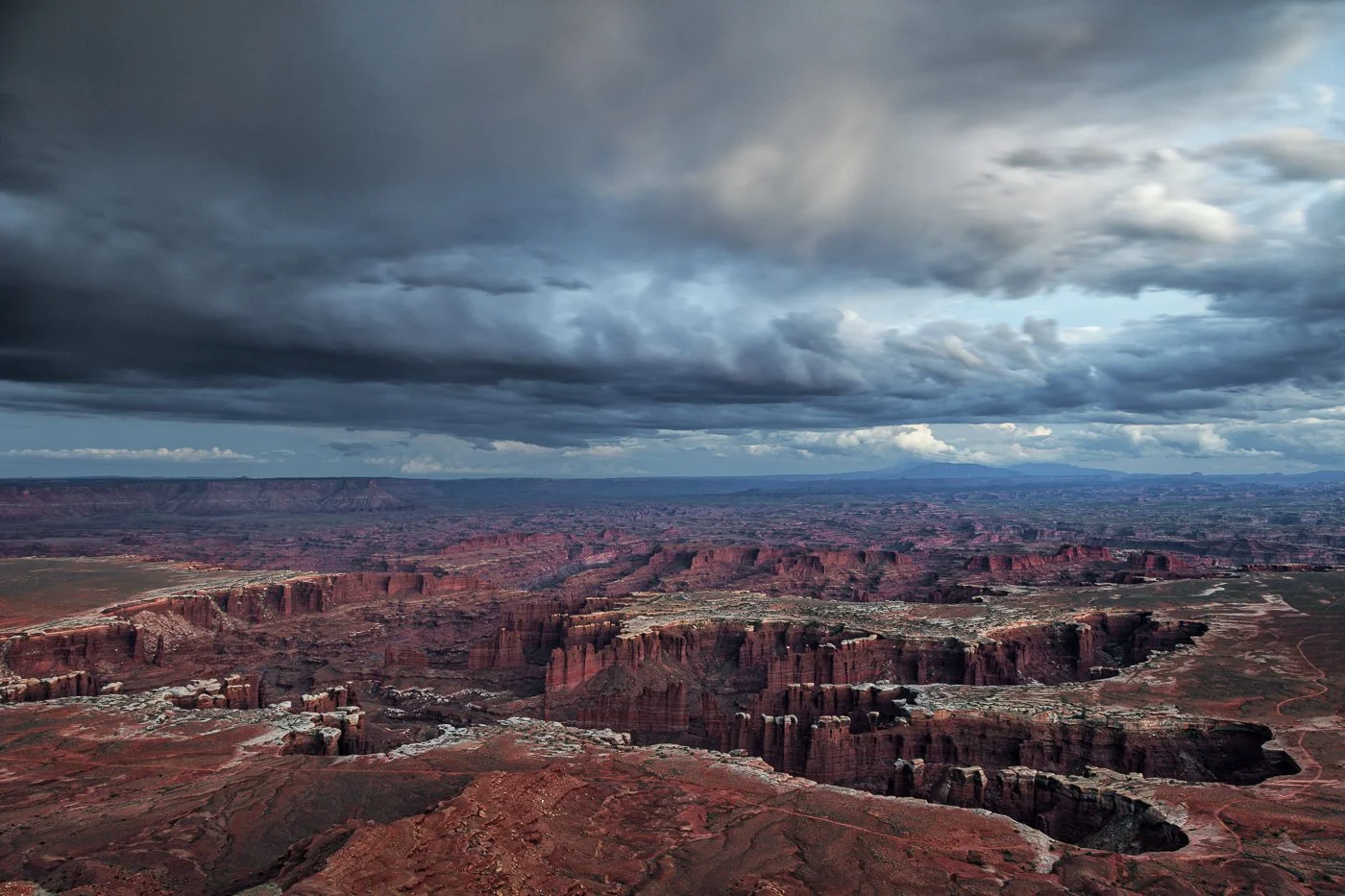
Standing at Grand View Point, the sheer scale of Canyonlands is humbling. In this shot, a heavy layer of rolling storm clouds hangs low over the white rim sandstone, casting moody shadows across the infinite maze of deep red rock canyons below.
4. Grand View Point Overlook (Canyonlands National Park)
Situated at the southernmost tip of the Island in the Sky mesa, Grand View Point offers a dizzying perspective of the canyon system below. While it's primarily a sunrise location, a monsoon storm can make it incredible at sunset, too.
Potholes as Anchors: Unlike other spots where potholes are used for mirror reflections, the large potholes along the rim here serve a different creative purpose. You can use these water-filled basins as foreground elements to anchor your scene and visually guide the viewer's eye through the frame.
Natural Foreground Elements: The entire canyon rim is dotted with twisted, weathered gnarled juniper trees. Framing these resilient desert trees against massive, stormy skies balances out the sheer depth of the canyons.
Lens Versatility: The landscape here demands flexibility. An ultra-wide to moderate zoom—such as a 14-24mm, 24-70mm, 24-105mm, or 28-200mm—will give you the freedom to transition from sweeping grand landscapes to intimate details of the rim.
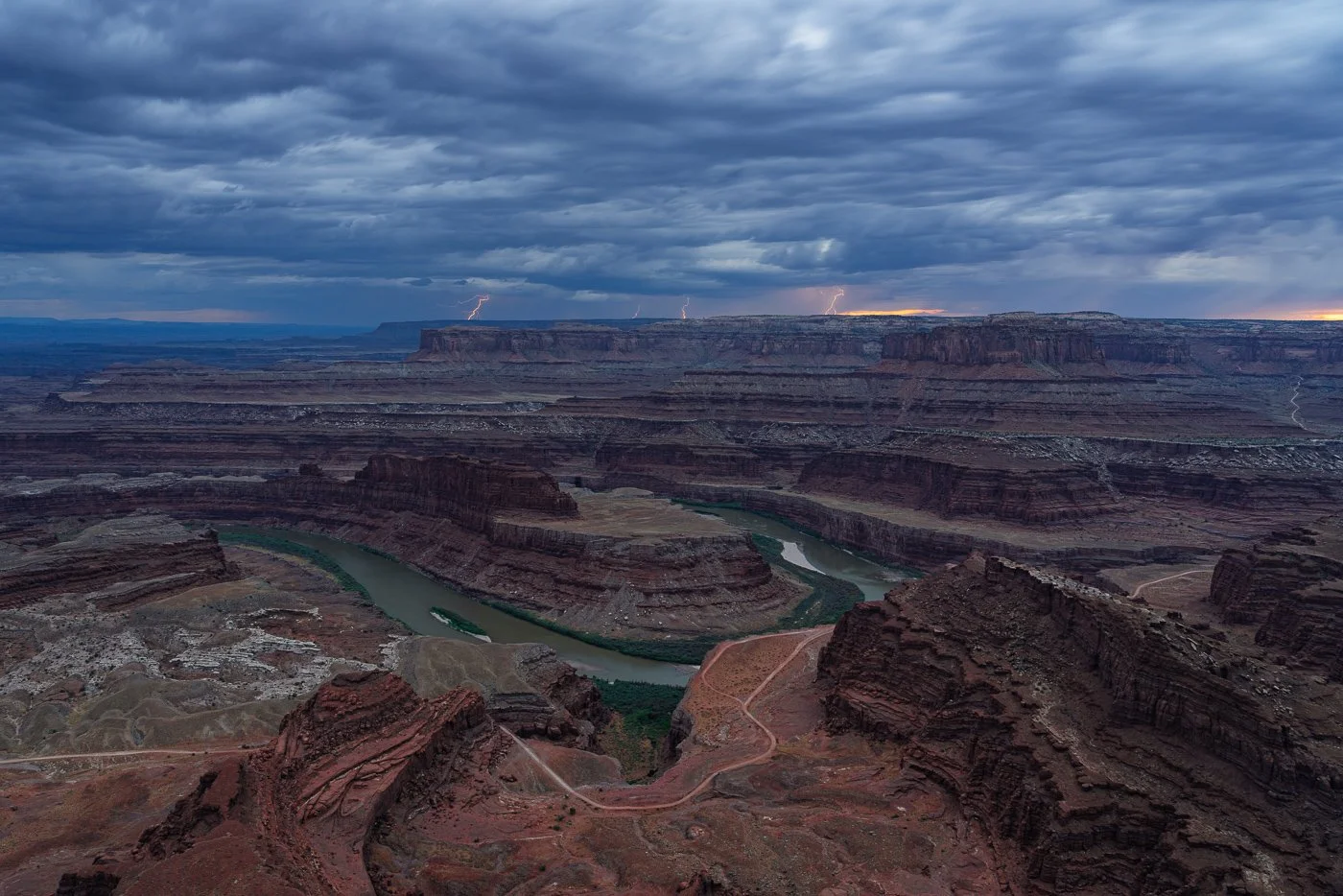
Timing is everything when monsoon season rolls through Moab. From the high overlook at Dead Horse Point State Park, this capture frames the dramatic sweeping curve of the Colorado River just as multiple lightning bolts split the sky on the far horizon, emphasizing the raw and volatile energy of a desert storm.
5. Dead Horse Point State Park
Sitting right next door to Canyonlands, Dead Horse Point offers a towering, 2,000-foot overlook above a gooseneck bend in the Colorado River. It is equally spectacular at sunrise or sunset when a summer storm breaks.
Endless Rim Compositions: Much like Grand View Point, the edge of the mesa here provides a playground for finding creative compositions. You can utilize unique sandstone rock formations and ancient junipers on the canyon rim to create depth.
Dramatic Storm Scale: The sheer verticality of the cliffs paired with a massive storm front creates an unmatched sense of scale. The wet sandstone deepens in color when rained on, making the red and orange layers pop vividly against dark, localized rain shafts.
Lens Recommendations: Stick with your workhorse focal lengths here. A wide 14-24mm is perfect for capturing the entire sweep of the river bend under a dramatic sky, while a 24-105mm allows you to isolate pockets of storm light dancing across the canyon floors.
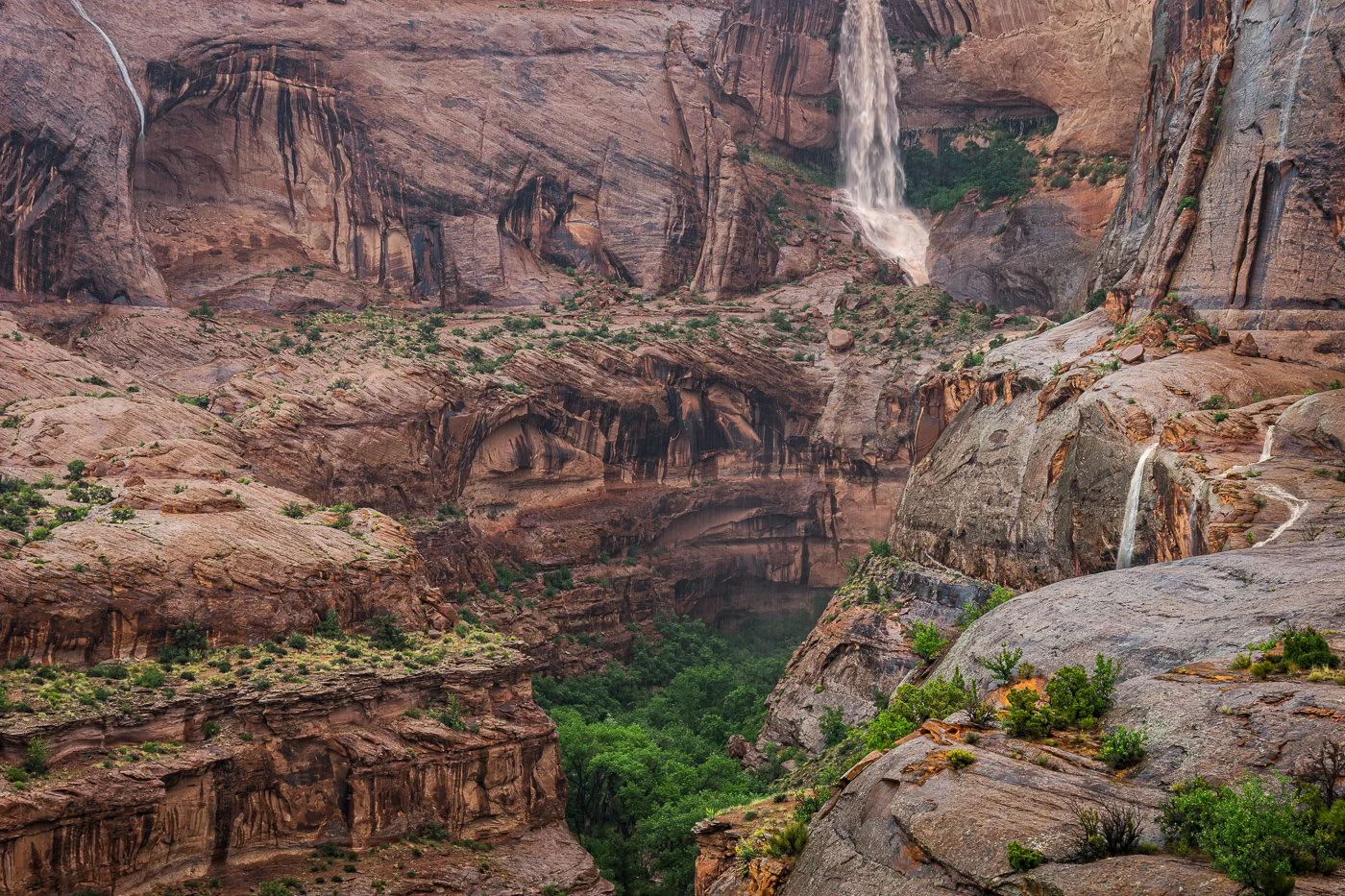
Seeing water flow in Moab is a transformative experience for any photographer. A heavy downpour turns Moonflower Canyon into a paradise of ephemeral cascades, sending a powerful muddy torrent plunging from the upper rim while delicate, smaller waterfalls spill over the foreground ledges into a surprisingly lush canyon floor.
Bonus Location: The Waterfall Hunt (Kane Creek Road & Highway 128)
If you are already out driving during a heavy downpour or immediately after the clouds break, don't just head straight back to town. Instead, take a drive down Kane Creek Road or alongside the Colorado River corridor on Highway 128.
Ephemeral Muddy Waterfalls: During a massive deluge, the desert drainage systems fill up instantly. You will be treated to the rare, spectacular sight of chocolate-milk-colored waterfalls pouring directly off the sheer canyon cliffs.
The Long Exposure Setup: To make the rushing, falling water look silky smooth against the rugged canyon walls, stack a solid neutral density (ND) filter onto your lens. This allows you to drop your shutter speed for a longer exposure even in daylight.
Lens Recommendations: A versatile intermediate zoom lens like a 24-105mm or a 28-200mm is perfect for this. It gives you enough width to capture the cliff walls, while providing the reach needed to safely zoom in on specific cascades across the river or high up on the rims.
Ready to Chase the Light?
Photographing a desert monsoon takes patience, preparation, and a willingness to get a little wet—but the rewards are entirely worth it. Be sure to check out my eFotoGuides that give you the information you need to be in the right place at the right time. As a small business owner, all purchases are appreciated and will help me continue to produce valuable content.
Which of these overlooks or backcountry drives are you adding to your photography bucket list for your next trip to Moab?