
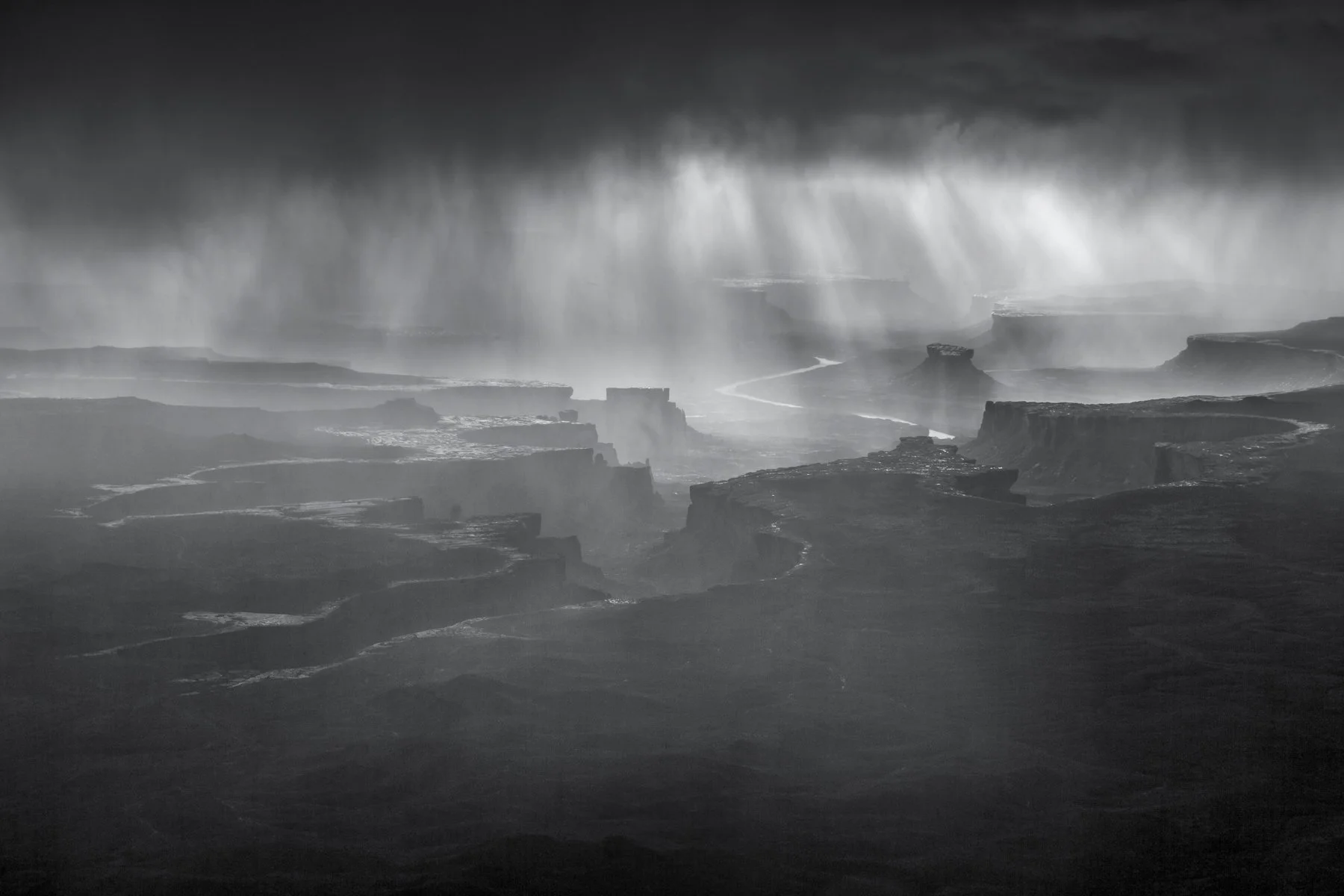
When packing your gear bag for a photography trip to Moab, the knee-jerk reaction is to grab the widest lens you own and call it a day. I’ve seen this time and again over the last twenty years as a landscape photography tour guide. But here’s the thing: if you only shoot ultra-wide, you’re definitely leaving great images on the table. Some of my favorite Moab-area photographs were shot at longer focal lengths, including the image below looking into Shafer Canyon from Mesa Arch.
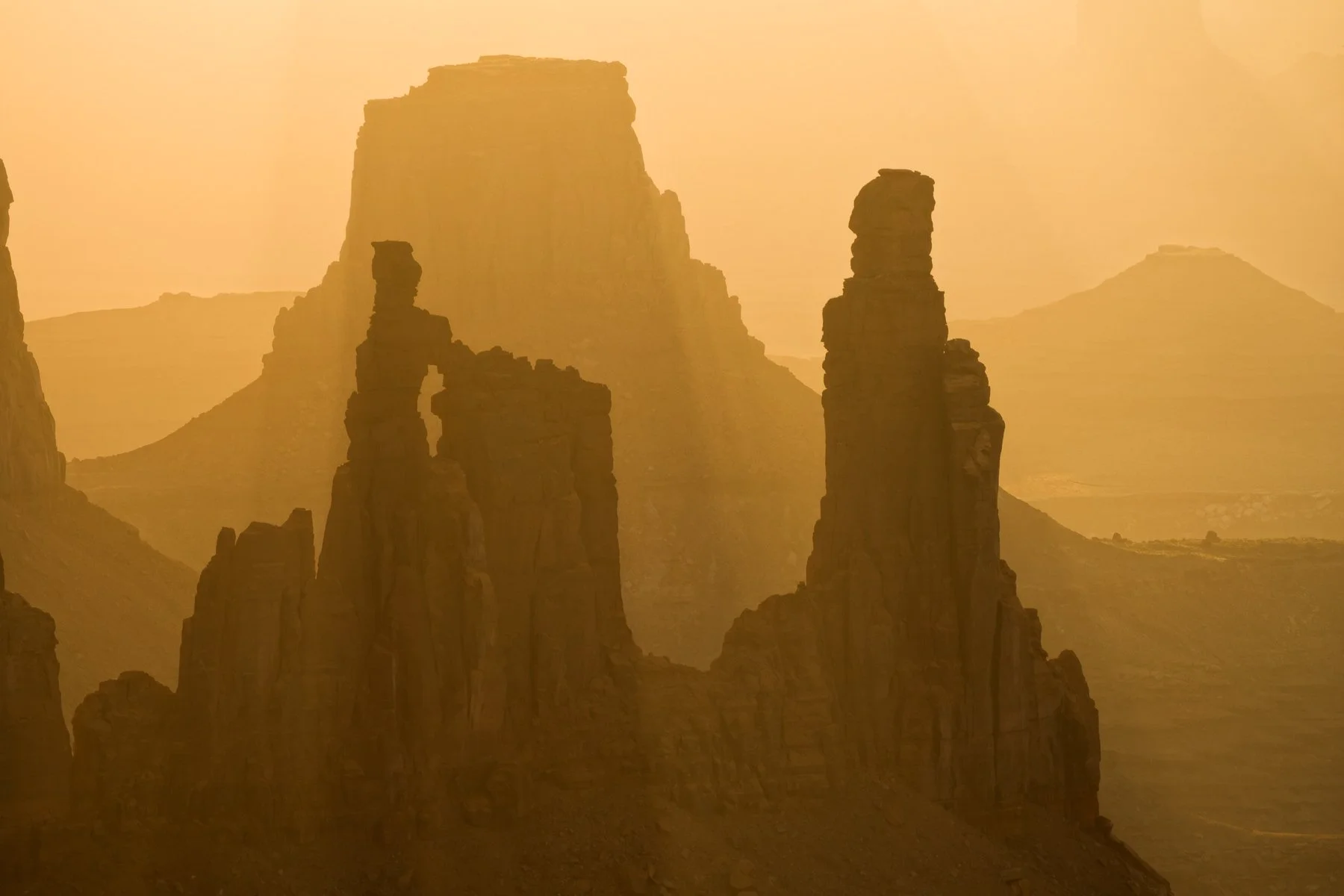
The Ultimate Moab Lens Lineup
To capture everything from sweeping canyon vistas to curious wildlife, intimate vignettes of autumn leaves and distant sandstone towers, your kit should balance versatility with specialized creative tools. Here is my field-tested breakdown of the best lenses to pack for Moab:
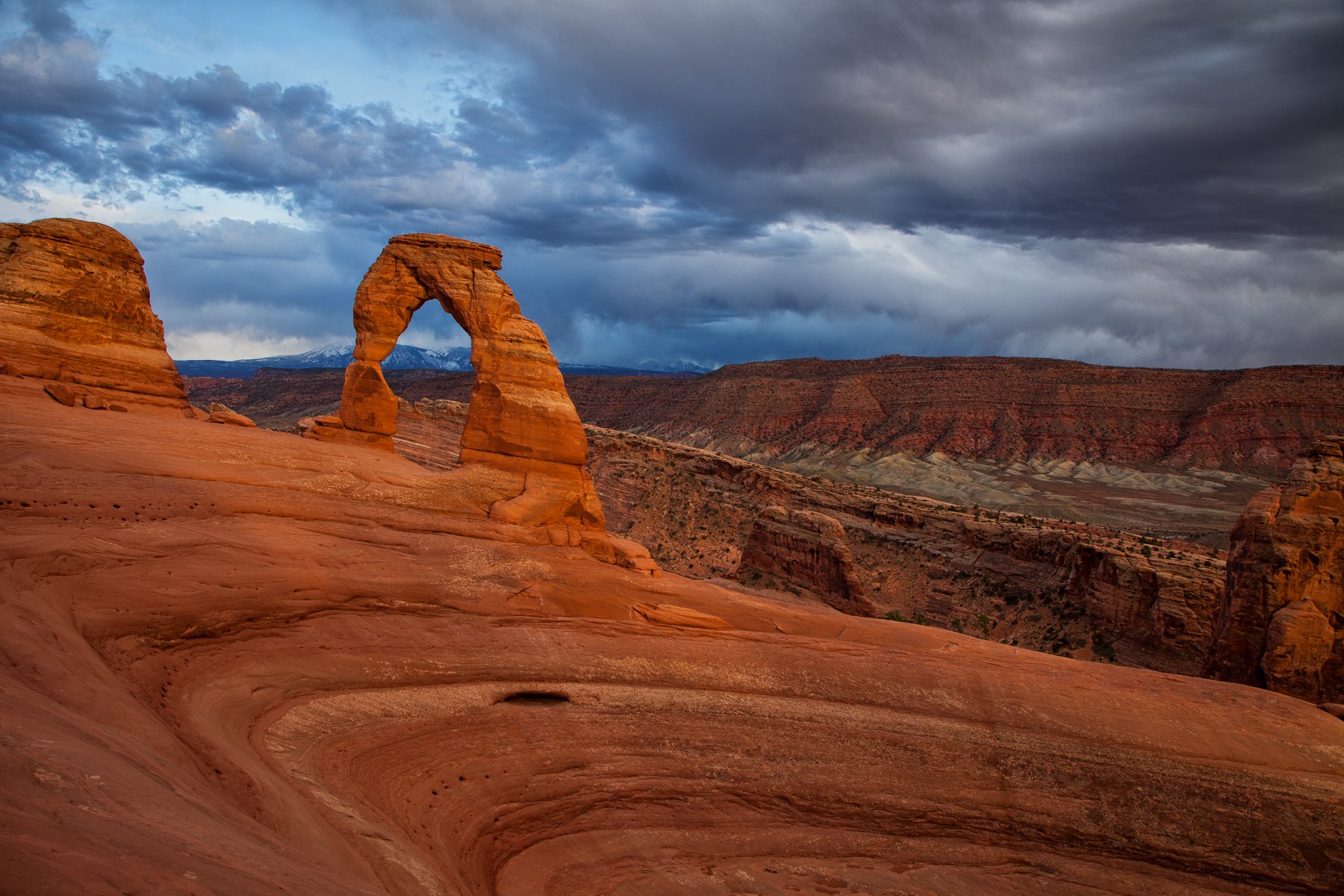
The Workhorse in Action: Shot with a 24-105mm lens, this view of Delicate Arch showcases why a standard zoom is so valuable in the desert. It provides enough wide-angle view to capture the sweeping lines of the slickrock bowl in the foreground while remaining tight enough to cleanly frame the La Sal Mountains beneath the span of the arch.
1. The Everyday Workhorse: 24-105mm
If you could only take one lens into Arches or Canyonlands, a 24-105mm should be your default choice. This has been my go-to lens for twenty years, beginning with the Canon version and carrying over when I switched to the Sony system.
The Advantage: It offers a highly versatile zoom range that covers everything from wide-angle vistas to moderate telephoto compositions.
Best For: When you are moving fast between locations and don't want to constantly swap glass in the harsh desert environment, which can be a recipe for a dirty sensor.
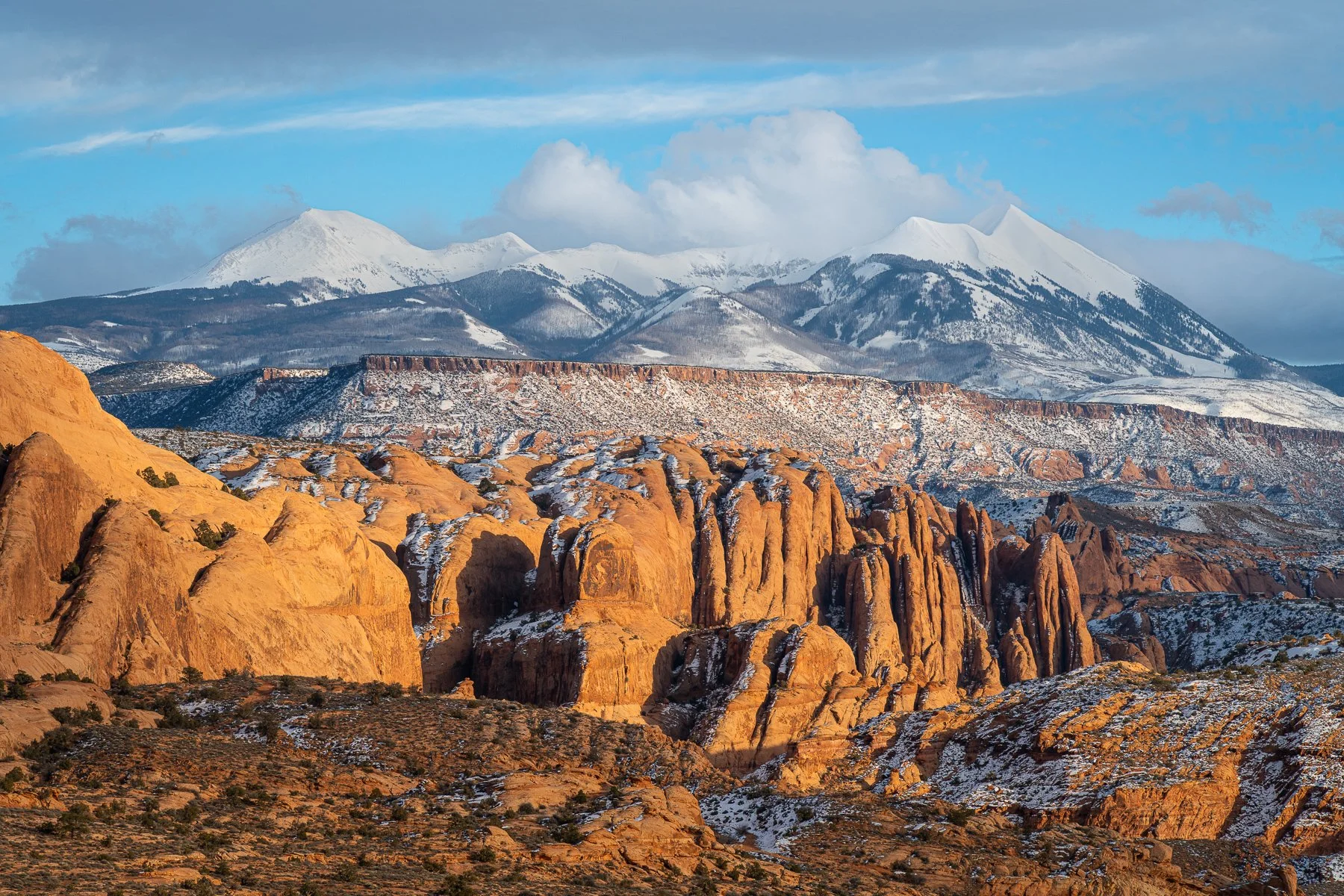
Compression and Versatility: Photographed with a 28-200mm lens, Winter Sunset on Sandstone Fins and La Sal Mountains.jpg demonstrates the power of a long zoom in the desert. Zooming in past 100mm allows you to compress the perspective, bringing the massive, snow-capped peaks of the La Sal Mountains right into the backyard of Moab's glowing red rock fins.
2. The Backcountry Hiker’s Dream: 28-200mm
When a trail requires a strenuous trek—like the primitive loop at Devils Garden—saving weight is critical.
The Advantage: An all-in-one zooms like the Tamron 28-200mm cover an incredible range of focal lengths allowing you to shoot everything from wide-angle landscapes to macro images and even wildlife. I haven’t upgraded to it yet but Tamron now has a 25-200 that is not only 3mm wider but also includes improved focusing.
Best For: Long day-hikes where you want a minimal footprint but still need the flexibility to shoot wide-angle landscapes or distant rock formations.
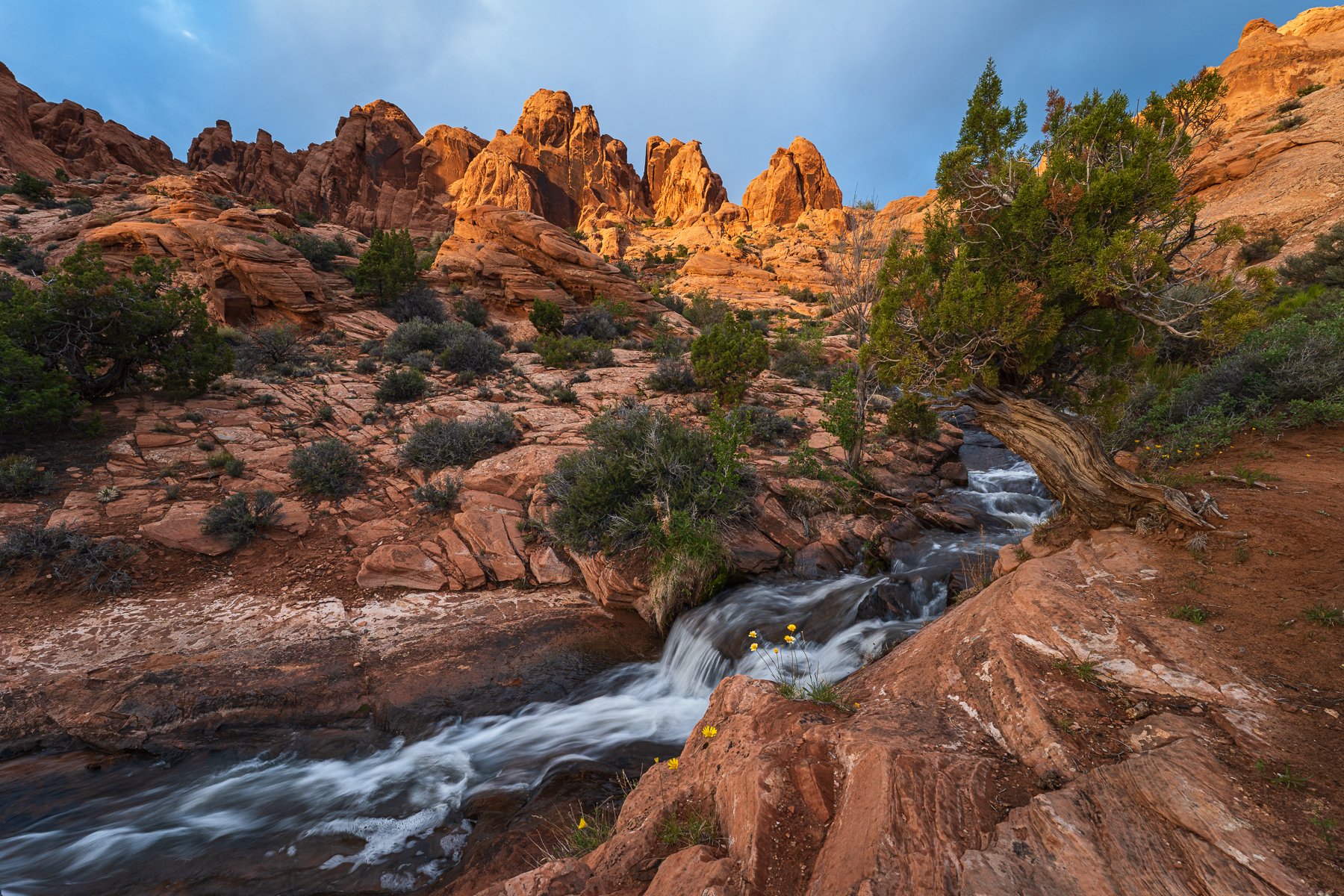
Emphasizing the Foreground: In Sunset Light on Sandstone Pinnacles Above Faux Falls.jpg, an ultra-wide 14-24mm lens was used to get down close to the rushing stream. This perspective exaggerates the foreground elements—like the motion of the water and the twisted juniper tree—while still allowing the sunset-lit sandstone pinnacles to dominate the upper background.
3. The Dramatic Foreground Tool: 14-24mm
An ultra-wide lens like the Sigma 14-24mm isn't just about "fitting it all in"—it is about drawing the viewer directly into the environment.
The Advantage: It allows you to get incredibly close to elements in the environment, creating immersive compositions that emphasize strong foreground details.
Best For: Framing dynamic foregrounds like a twisted juniper tree, vibrant spring wildflowers, or pristine pothole reflections after a desert rain.
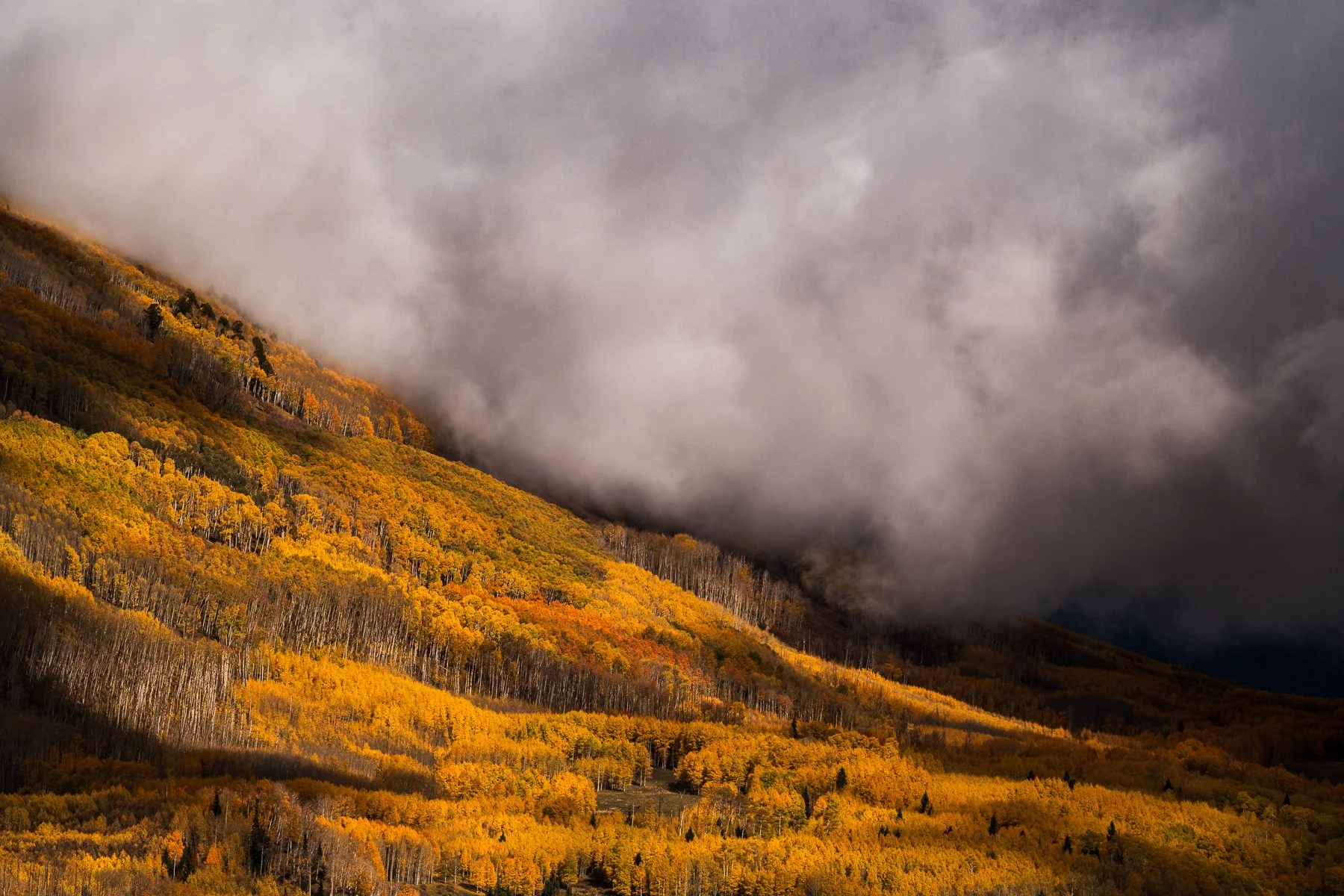
4. The Wildlife & Layer Compressor: 60-600mm
Do not leave your super-telephoto lenses at home. Moab isn't just a wide-angle playground; it is full of distant geometric patterns and unexpected wildlife. I’ve used everything from a 70-200mm, to the venerable 100-400 and most recently, the mind-blowingly good Sigma 60-600.
The Advantage: Massive reach that allows you to safely document the local desert fauna without disturbing them, while compressing distant mountain peaks behind red rock fins.
Best For: Spotting bighorn sheep on the canyon walls, tracking coyotes, mule deer, or ravens, and capturing tight, abstract layers of color during the autumn season.
Moab Field Tip: The fine red sand in Southern Utah is notorious for destroying camera sensors and lens mounts. Avoid swapping lenses in the open air, especially when the wind picks up. If you must change glass, do it inside your zipped camera bag or inside your vehicle to protect your gear. Always work as efficiently as possible to minimize the time your sensor is exposed to the elements.
Shoot the Desert with Local Experts
Choosing the right gear is only half the battle—knowing exactly where and when to deploy it is what makes a great image. On a Moab Photo Workshop, we take you directly to the most iconic viewpoints and hidden backcountry gems at the perfect time of day, helping you master perspective in the American Southwest.
Rather explore on your own but still want a local advantage? Check out eFotoGuide, our extensive selection of photography guidebooks to Arches National Park, Canyonlands National Park, Dead Horse Point State Park and other dramatic landscapes around Moab.
Ok, so…you came to Moab and were lucky enough to make a few amazing images of dramatic landscapes under dark, ominous skies. Don’t just leave them in Lightroom or post them to social media; print them! When creating your own photography prints there are really only two printers to consider: Epson and Canon. They both produce stunning prints and each one has unique pros and cons.You truly can’t go wrong. That said, I opted for the Canon imagePROGRAF Pro-310. I chose this printer for two primary reasons; it’s cheaper to operate than the equivalent Epson and the printhead is less likely to clog during irregular use. I’ve been using it for a few months and have produce around fifty prints, at various sizes, without issue.