
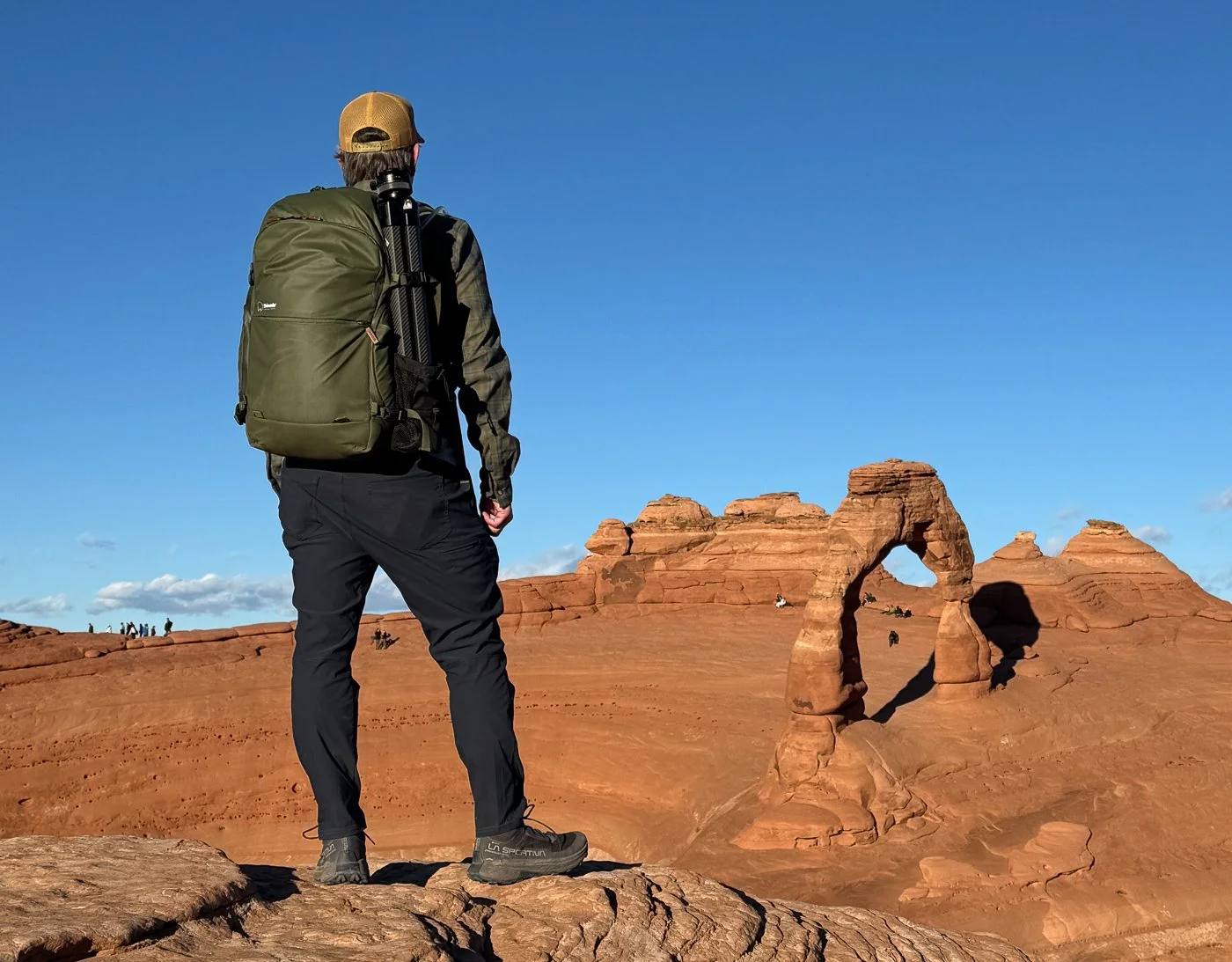
As landscape photographers, our camera packs are easily our most important pieces of non-photographic gear. In places like Moab, a good pack needs to protect thousands of dollars in equipment from dust, slickrock, rain and snow while remaining comfortable during long treks under the desert sun.
Today, we’re diving into a long-term review of the Shimoda Explore v2 35. Coming in at $319 (backpack only) or $399 (with a Core Unit), and available in Black or Army Green, it makes a great first impression.
But does it hold up on the trail? Let’s break down the good, the bad, and the ultimate verdict.
The Good: Organization and Build Quality
There is no denying that Shimoda knows how to design a pack for photographers who love order. The layout and build quality of the Explore v2 35 feature some incredible highlights:
Pockets Galore & Easy Organization: If you like a place for everything, this pack delivers. It’s incredibly easy to organize all your hiking and camera equipment, including smaller items like filters and extra batteries.
Rugged Materials: The main pack body features highly durable, water-resistant fabric that easily shrugs off scrapes against sandstone and sudden desert downpours. I’m not easy on gear, especially backpacks and hiking boots. My backpack has to endure being scraped against sandstone, poked by sharp branches, and laid down in snow or wet dirt. Shimoda’s pack material shows almost no signs of wear after a year of hard use.
Smart Grab Handles: With handles on the top, bottom, and side, hauling this pack out of a car trunk or a tight slot canyon is a breeze. This was a feature I didn’t think much of when I bought the pack but after using it for a year now, it really does make a difference.
Clean Back Design: Because the main gear compartment is accessed through the back panel, you lay the pack down on its front to open it. This keeps the side that touches your body completely free of mud, dust, and sand. It’s a small - but important - detail. This isn’t unique to Shimoda; f-stop gear pioneered it and now many brands design their packs with a rear opening.
Dual Access: You can get to your gear via the rear opening or a handy side door (though truth be told, I only ever use the rear panel).
Versatile Tripod Carry: You can secure a tripod on either side of the pack, and it’s easy to access quickly when needed. With two compression straps it’s easy to lock the tripod tight against the pack, leaving zero room for the tripod to wobble around.
Thoughtful Ergonomics: It features an adjustable torso length to dial in the fit, a dedicated phone holder on the left shoulder strap, and Shimoda even offers women’s-specific shoulder straps for better comfort. I’m only 5’9” but I have a long torso. Most packs without an adjustable torso length or multiple sizes don’t fit me. I was able to perfectly fit the Shimoda.
The Perfect Size: At 35 liters, it hits the sweet spot. It holds a robust camera setup while leaving plenty of room for hiking essentials like food, headlamps, and extra layers but it never feels too big, even on short hikes or when working from near my vehicle. In it, I carry a Sigma 14-24 and 60-600 lens, two filters, a Lume Cube panel light and sometimes, a DJI Mavic Mini 3 Pro drone. I carry my Sony A7IV and 24-105mm lens, with an extra battery, in an Osprey chest pack that I will review later.
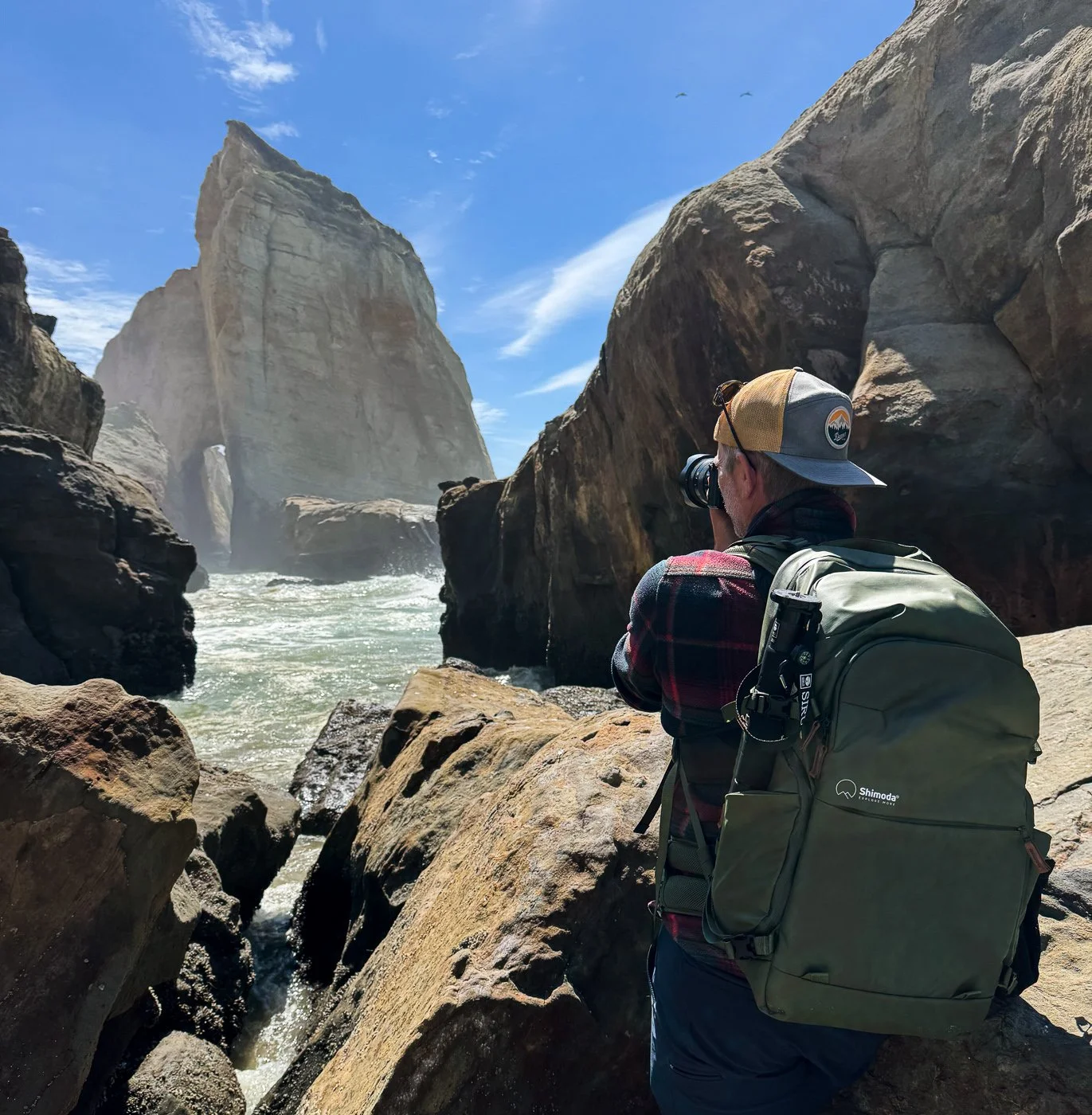
Putting the water-resistant fabric of the Shimoda Explore v2 35 to the test amidst the ocean spray and rugged sea stacks at Cape Kiwanda, Oregon.
The Disappointments: Quirks and Material Choices
While the main body of the pack is bomber, a few design choices and hardware flaws left mr scratching my head:
Flawed Sternum Strap: I found it incredibly frustrating that I cannot get the sternum strap tight enough. Worse yet, it isn't secured to the shoulder strap very well and has a bad habit of popping off easily when placed under tension.
Flimsy Side Pockets: The deployable water bottle/tripod pockets on the sides are made of a flimsy nylon. They don't match the durability of the main pack body and mine already show signs of wear.
Awkward Rear Access: When you peel the back panel open to get to your lenses, the hip belt consistently gets in the way of the zipper, slowing down your workflow.
Hydration Integration: The water bladder compartment is located on the very front of the pack with a bizarre hose routing. Placing 2-3 liters of water that far from your spine puts the weight too far to the rear, throwing off your center of balance. Also, when the pack is full of equipment, it’s difficult to insert the bladder into the tight front pocket.
The Mystery Pocket: There is a weird zip-out pocket on the right shoulder strap that I have yet to find a practical use for. On the Shimoda website it shows a silicone running style bottle in the pocket, which is the only way I can see it being used.
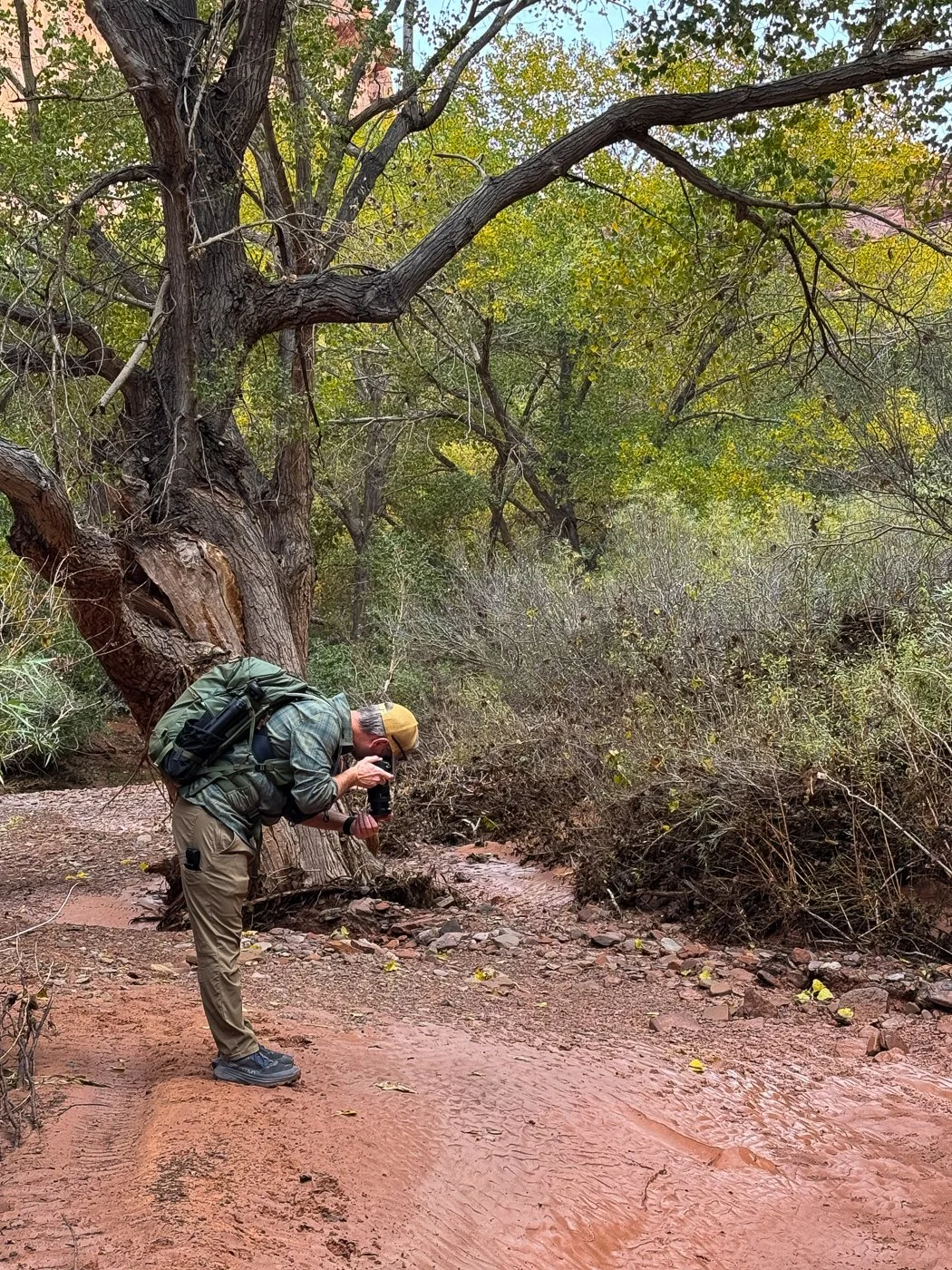
Here I am field testing the Shimoda Explore v2 35 among the cottonwoods in a Moab canyon, assuming a position you’ll commonly find me in when autumn comes around.
The Dealbreaker: Suspension and Comfort
All the smart pockets in the world don't matter if a pack is painful to carry. Unfortunately, this is where the Explore v2 35 falls short.
A 35-liter camera pack fully loaded with equipment, a tripod, and water gets heavy fast. For a pack of this size, the suspension system needs to transfer that weight to your hips. On the Explore v2, the hip belt fails to support the weight properly.
Because it lacks hip belt load-tensioners (load lifters for the hips), the weight sags, placing strain directly on my shoulders and lower back. It doesn’t take long on the trail for the soreness to set into my shoulders and back, making it difficult to enjoy hikes that last more than an hour. On hikes longer than an hour, I pre-emptively take ibuprofen to dull the ache in my back and shoulders.
I would be willing to forgive the negatives listed above if the Shimoda Explore V2 35 transferred the weight to my hips and allowed me to carry my camera gear comfortably on long hikes. The other issues are relatively minor but a poor suspension system that leaves my back and shoulders aching is unforgivable.
Alternative Packs to Consider
If you are looking for a pack with a similar size profile and layout but want to explore options with different suspension designs or gear access methods, here are four similar alternatives worth checking out. I’ve used both f-stop gear and Mindshift packs in the past. The f-stop Ajna will likely be my next backpack.
f-stop Ajna 37L: A classic modular mountain pack that uses internal camera units (ICUs) and features a rugged fabric build with a highly capable harness system.
Atlas Athlete (20-40L): Known for its phenomenal hiking-grade suspension system and unique "Origami Core" that shifts space between camera gear and personal items on the fly.
Think Tank BackLight 36L: A robust back-panel access pack that offers a massive 11 liters of front daypack capacity for extra food and layers.
MindShift Rotation 34L: Features a revolutionary rotating belt pack that allows you to swing your camera gear around to the front without ever taking the backpack off. I loved this feature of the pack.
The Verdict: Would I Recommend the Shimoda Explore V2 35?
The Short Answer: No.
While I love the layout, the durable main fabric, and the sheer amount of gear it can hold, a backpack's primary job is to carry weight comfortably. Because it fails to distribute a heavy camera load properly—and is held back by a frustrating sternum strap—I cannot recommend the Shimoda Explore v2 35 for photographers who spend long hours or long distances on the trail.
If you primarily shoot close to the vehicle or do short walks, the organization might win you over. But if you’re looking for a true backcountry companion for long desert treks, your shoulders and back might want to look elsewhere.
Have you tried the Shimoda Explore series, or have you switched to one of the alternatives listed above? What is your go-to camera pack for long days on the trail? Let me know in the comments below!