• Home
    • About Us
    • Resources
    • Moab Photography Tips
    • eBooks
    • eGuides
    • Private Workshops
    • Workshop FAQ's
    • Testimonials
    • Arches National Park
    • Canyonlands National Park
    • Magnificent Moab
  • Contact
  • Blog
Menu

Moab Photography Workshops

137 N. Main St.
Moab, Utah 84532
6025714170

Your Custom Text Here

Moab Photography Workshops

  • Home
  • Info
    • About Us
    • Resources
    • Moab Photography Tips
  • eFotoGuide
    • eBooks
    • eGuides
  • Workshops
    • Private Workshops
    • Workshop FAQ's
    • Testimonials
  • Images of Moab
    • Arches National Park
    • Canyonlands National Park
    • Magnificent Moab
  • Contact
  • Blog

Behind the Image: Sunset Light on Second Wave

October 18, 2019 Bret Edge
A warm winter sunset splashes light on the Second Wave in the Coyote Buttes region of the Vermillion Cliffs National Monument, Arizona…or Utah?

A warm winter sunset splashes light on the Second Wave in the Coyote Buttes region of the Vermillion Cliffs National Monument, Arizona…or Utah?

Professional landscape and adventure photographer Bret Edge discusses the process behind the making of his image of the Second Wave in the Coyote Buttes area on the Utah/Arizona border.

Read more
In Behind the Image Tags behind the image, coyote buttes, the wave, second wave, vermillion cliffs national monument, arizona, utah, page, page photography, arizona photography, utah photography, desert southwest photography, desert photography, sandstone, michael fatali
Comment

Part One: Building the Ultimate Adventure and Photography Vehicle - Introduction

October 1, 2019 Bret Edge
Betty and Clark - A 2015 Ford F-150 and 2019 Four Wheel Campers Raven, the perfect set up for outdoor adventures and photography.

Betty and Clark - A 2015 Ford F-150 and 2019 Four Wheel Campers Raven, the perfect set up for outdoor adventures and photography.

Professional landscape and adventure photographer Bret Edge introduces his new overlanding vehicle for outdoor adventures, photography and family road trips.

Read more
In Ultimate Adventure Rig Tags van life, overlanding, overland, adventure photography vehicles, off road vehicles, king off road suspension, icon vehicle dynamics, icon delta joint, nitto tires, nitto ridge grappler tires, method wheels, four wheel campers, overland photography, overland adventure, camping, camp life, ford, ford f150, airlift airbags, overlanding usa, explore, adventure, overland lifestyle, overland travel, overland life, moab, ultimate photography vehicle, ultimate mountain bike vehicle, vanlife
2 Comments

Behind the Image: Washer Woman Arch and Monster Tower at Sunrise

September 20, 2019 Bret Edge
Washer Woman Arch and Monster Tower at Sunrise, Canyonlands National Park, Utah

Washer Woman Arch and Monster Tower at Sunrise, Canyonlands National Park, Utah

Professional landscape and adventure photographer Bret Edge discusses the process behind the making of his image of Washer Woman Arch, Airport and Monster Towers backlit in golden haze below Mesa Arch in Canyonlands National Park near Moab, Utah.

Read more
In Behind the Image Tags national park photography, canyonlands national park photography, canyonlands national park, canyon country photography, moab photography, mesa arch, washer woman arch, monster tower, airport tower, moab photography tips, moab utah photography, island in the sky, canyonlands national park photography conditions, canyonlands national park photography tips
Comment

Four Tips to Improve Your Fall Color Photography

September 16, 2019 Bret Edge
Cottonwood trees lining an unnamed creek show off the colors of fall below the iconic spires of Castleton Tower and the Priest and Nuns in Castle Valley, Utah.

Cottonwood trees lining an unnamed creek show off the colors of fall below the iconic spires of Castleton Tower and the Priest and Nuns in Castle Valley, Utah.

This morning I walked outside and was all like, wait, what...it's actually kinda not hot out here. What is going on? Then I looked at my phone and saw the date, September 3, and realized that, holy crap, fall is right around the corner. Fall! My favorite season! I did a little happy dance, collected myself and walked back inside to get ready for another day in paradise. With golden leaves already starting to appear in some areas of the Rockies I thought I'd take a few moments to share a few tips that may help you to create spectacular images this autumn. I hope you find them helpful.

FILTERS...KNOW THEM, USE THEM, LOVE THEM

Colorful leaves swirl in the cold waters of the Left Fork of North Creek as it flows through a section of canyon known as “The Subway” in Zion National Park near Springdale, Utah.

Colorful leaves swirl in the cold waters of the Left Fork of North Creek as it flows through a section of canyon known as “The Subway” in Zion National Park near Springdale, Utah.

There is one filter I consider essential for photography in the fall, and yet another I highly recommend for creative expression. The venerable polarizing filter belongs in your kit year round but is especially handy during the colorful days of fall. I have never been a huge fan of using a polarizing filter for wide-angle landscapes but when shooting interior forest scenes and/or intimate compositions involving water (i.e. waterfalls, streams, etc.), a polarizer will remove or minimize reflections, thus giving the entire scene a more rich, saturated look. I always used Singh-Ray filters, specifically their fantastic Thin Ring Neutral Polarizer, which has a thinner outer ring that is less likely to cause vignetting when shooting at wider focal lengths.

The second filter I recommend is a solid neutral density (ND) filter. These filters are available in two versions: adjustable and non-adjustable. I've used the adjustable versions and find them to be...okay. Not great, just okay. They tend to work well when used at lower power but, in my experience, they introduce weird color casts when used at higher powers. Maybe the newer versions are better? Regardless of which type you choose, an ND filter reduces the amount of light reaching your camera sensor, thereby slowing the shutter speed. This can be used to great creative effect if you want to show movement, i.e. leaves swaying in the wind. These images will tend to have a more impressionistic, and at times, almost abstract mood to them.

I LIKE LONG LENSES AND I CANNOT LIE

Aspen trees and gambel oak display brilliant autumn leaves in the La Sal Mountains near Moab, Utah.

Aspen trees and gambel oak display brilliant autumn leaves in the La Sal Mountains near Moab, Utah.

It's easy to get suckered into using wide angle lenses for landscape photography but the magic happens when you break out a long lens to isolate an interesting "scene within a scene." I used long lenses year-round but they got a real workout every fall when the aspens and cottonwoods would put on the all-too-short psychedelic show.

I think if you ask most accomplished landscape photographers whether it’s easier to use a wide angle or long lens for landscapes the answer would be overwhelmingly “wide angle.” I remember making a conscious decision to master intimate landscapes early in my photography career. I definitely didn’t master the art but I did manage to figure out how to create some pretty interesting images of scenes that most people would walk right by without so much as a glance. What’s the secret? You’ve got to learn how to create tension and balance all within the same image. Look for patterns, either actual or implied. Create order out of chaos. The essence of a really good intimate landscape is to work the scene until you’ve eliminated everything that isn’t necessary so that all that remains in the frame is the very thing that caught your eye. For that matter, that’s true of any photograph.

I could tell you to do this and do that with your long lens but the only real way to learn is to go out into the autumn trees, mount up a long lens and start experimenting. I always used either a 100-400mm lens when I shot with Canon and when I switched to Sony, my go-to glass was a 70-200mm lens. Also, don’t be afraid to experiment with depth of field while shooting at telephoto focal lengths. Sometimes, it’s better to use a narrow depth of field so your main subject pops from the blurred background.

The single best resource you’ll find on photographing the intimate landscape is Beyond the Grand Landscape: A Guide to Photographing Nature’s Small Scenes by Sarah Marino and Ron Coscorrosa. It’s the best $19.95 you’ll spend this year.

SUNRISE, SUNSET AND EVERYTHING IN BETWEEN

Raindrops gather on a single colorful aspen leaf on a cloudy day in the La Sal Mountains near Moab, Utah.

Raindrops gather on a single colorful aspen leaf on a cloudy day in the La Sal Mountains near Moab, Utah.

There’s no such thing as bad light, just bad photographers. That might be a harsh statement but it’s true. If you’re a photographer who bitches and moans when the light “isn’t right”, you’ve got some learnin’ to do. Photography is just painting with light - any light - so learn to use whatever light you’re presented with to make dynamic images.

We all know about the magic that happens at sunrise and sunset, but there’s a lot of time in the day between those two events - use it! Overcast light is perfect for macro work or intimate landscape photography. The soft, diffused light casts only quiet shadows, allowing even old cameras to record the full dynamic range of a scene. I love wandering around in aspen groves on overcast days. The opportunities are virtually limitless.

Even harsh mid-day light can produce extraordinary image possibilities. Look for high contrast scenes, i.e. a backlit tree, leaves glowing as if lit from within, against a deeply shadowed cliff face. Let those shadows go deep, deep black. High contrast scenes often times have the most visual impact.

Bonus Tip: While you’re out wandering around in the middle of the day, keep your eyes peeled for potential sunrise or sunset locations. This is what we call “scouting”. Worst case scenario, you spend the day walking around in the woods/desert/mountains/canyons, rather than sitting behind a desk or staring at your phone screen. That’s a win, right?

POST-PROCESSING PITFALLS

Imposing clouds loom at sunset over the Moab Fault in the desert below a canyon filled with brilliant aspen trees high in the La Sal Mountains near Moab, Utah.

Imposing clouds loom at sunset over the Moab Fault in the desert below a canyon filled with brilliant aspen trees high in the La Sal Mountains near Moab, Utah.

I confess, I’m guilty of sliding the saturation slider just past the point of believability. If a little is good, more is more better, right? Wrong. So wrong.

In the mountain bike world, there’s an edict that bikes have gotten so good, there really aren’t any bad bikes anymore. Well, unless you’re buying a bike from Wal-Mart. Anyway, that’s really pretty true of photo processing software, too. I remember when Photoshop was the shizz. And then it was Lightroom. Now, basically anything you buy is more powerful than Photoshop was 15 years ago. However, with great power comes great responsibility.

If I had to sum up the single most common post-processing issue I could do it with one word: more. More saturation, more shadow recovery, more highlight recovery, more HDR, more processing…MOAR!!!! I’ve long strived for my images to remain within the realm of realism. I try to photograph in the best light with the best possible exposures at the correct aperture so I can spend less time post-processing images and more time out in nature. There are photographers who have made a name for themselves overusing processing to create images that are less about reality and more about fantasy. I appreciate their style of art, but it’s not my thang.

In a nutshell, when you’re processing you images, consider reigning it in just a little bit.

If you’re less of a computer geek and more of an outdoor geek, like me, it’s not a bad idea to get some help. I know my way around Lightroom and Photoshop these days, but I’ve been using both for a long time and have bought how-to books, watched YouTube tutorials and had good friends share some of their tips with me. Of all the resources I’ve used, none have been more valuable than Yosemite photographer Michael Frye’s “Landscapes in Lightroom” ebook and Sean Bagshaw’s incredible video tutorials. Michael’s ebook is a great launching point for beginner and intermediate photographers while Sean’s tutorials are helpful for intermediate to advanced image processing techniques.

If you happen to find yourself super inspired for fall photography, please consider purchasing one of my ebooks. Doing so will help me continue to create content for this blog and you’ll surely get a little boost to your karma cup. I’ve got three ebooks covering Arches, Big Bend and Zion National Parks, each costing only $15 or you can buy the whole bundle for $40. Just click here for all the details on eFotoGuide!

I hope you find these tips helpful and, if you’ve got a tip of your own, feel free to leave it in the comments below. Enjoy the autumn leaves!


In Beginners Guides Tags autumn, fall, seasons, photography tips, autumn photography tips, fall color, fall photography tips, photography techniques, zion national park, arches national park
Comment

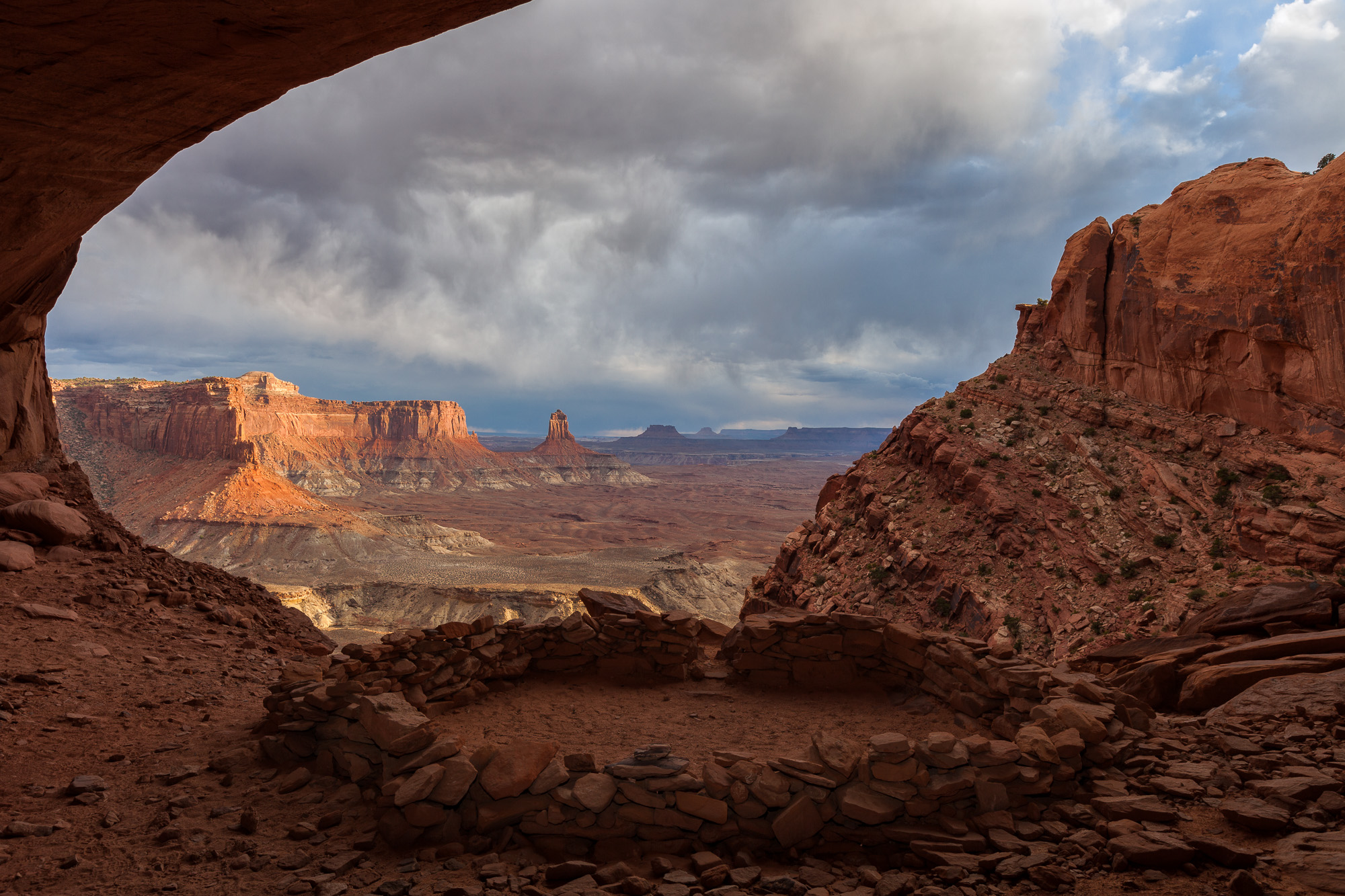
Behind the Image: Last Light at False Kiva

September 6, 2019 Bret Edge
Last Light at False Kiva, Canyonlands National Park, Utah

Last Light at False Kiva, Canyonlands National Park, Utah

Professional nature and adventure photographer Bret Edge writes about the experience of creating his popular images of False Kiva in the Island in the Sky district of Canyonlands National Park near Moab, Utah.

Read more
In Behind the Image Tags false kiva, canyonlands national park photography, island in the sky, national park photography, indian ruins, anasazi ruins, behind the image, moab photography, utah photography, utah, moab, national parks, national park photography guides, moab photo workshops, moab utah photography, desert southwest photography, southwest
8 Comments

Creative Sparks in Wet Sand

September 3, 2019 Bret Edge
Golden sunset light reveals patterns and textures in wet beach sand on a secluded beach along the Oregon Coast.

Golden sunset light reveals patterns and textures in wet beach sand on a secluded beach along the Oregon Coast.

Professional landscape and adventure photographer Bret Edge writes about finding inspiration in strange places and rekindling his passion for photography on a remote Oregon beach.

Read more
In Essays Tags oregon, beaches, intimate landscape photography, intimate landscapes, patterns, textures, oregon coast, sony a6000, pacific northwest, creativity, creative photography, passion
4 Comments

Introducing Betty White - Our New Outdoor Adventure Photography Vehicle

August 30, 2019 Bret Edge
Betty White enjoying the view from Cinnamon Pass in the San Juan Mountains outside Silverton, Colorado.

Betty White enjoying the view from Cinnamon Pass in the San Juan Mountains outside Silverton, Colorado.

Introducing the new Bret Edge Photography/Moab Photo Workshops outdoor adventure photography vehicle, a 2015 Ford F-150 with King Off Road Suspension, Method Race Wheels, Icon Vehicle Dynamics upper control arms and Nitto Ridge Grappler tires.

Read more
In Essays Tags ford, f150, off road vehicles, 4x4, adventure photography trucks, adventure photography vehicles, betty white, four wheel campers, method wheels, nitto tires, nitto ridge grappler tires, king off road suspension, icon vehicle dynamics, icon delta joint, bilstein, deaver springs
Comment

Moab Photography Conditions - May 19, 2019: SUPER BLOOM!

May 19, 2019 Bret Edge
Wildflowers in Sand Dunes Below Chimney Rock - Moab, Utah

Wildflowers in Sand Dunes Below Chimney Rock - Moab, Utah

Moab landscape and adventure photographer Bret Edge shares an update on the 2019 wildflower super bloom at Arches National Park, Canyonlands National Park, Dead Horse Point State Park and the general Moab area.

Read more
In Moab Photo Conditions Tags moab photography, moab, moab photo tours, moab photography conditions, moab photography tips, moab news, moab weather, arches national park status, arches photo tips, arches national park, arches photo conditions, arches national park photography tips, arches national park photography conditions, canyonlands national park photography, canyonlands national park, canyonlands natural history association, canyonlands national park status, canyonlands national park photography conditions, canyonlands national park photography tips, canyon country photography, dead horse point state park photography, dead horse point photography tips, dead horse point state park photography conditions, moab super bloom, moab wildflowers, moab wildflower update, desert superbloom
Comment

Moab Photography Conditions - March 3, 2019

March 3, 2019 Bret Edge
Courthouse Towers Reflecting in Pothole Below Clearing Storm, Arches National Park, Utah

Courthouse Towers Reflecting in Pothole Below Clearing Storm, Arches National Park, Utah

Professional landscape and adventure photographer Bret Edge provides updated, real-time photography conditions in Moab, Utah as of March 3, 2019.

Read more
In Moab Photo Conditions Tags arches national park status, arches photo tips, arches national park, arches photo conditions, arches national park photography tips, delicate arch photography tips, landscape arch photography tips, canyon country photography, canyonlands national park photography, canyonlands national park, canyonlands natural history association, canyonlands national park status, canyonlands national park photography conditions, canyonlands national park photography tips, moab photography, moab photo tours, moab photography tips, moab photography tours, moab photo workshops, moab photography workshops, moab weather, moab weather update, moab photography conditions, moab news, southeast utah weather, utah photography workshops, southeast utah photography conditions
Comment

Behind the Image: Hiker Leaping at Delicate Arch

March 1, 2019 Bret Edge
Hiker Leaping at Delicate Arch, Arches National Park, Utah

Hiker Leaping at Delicate Arch, Arches National Park, Utah

Professional nature and adventure photographer discusses what went into the making of his image of a female hiker jumping from rock to rock at Delicate Arch in Arches National Park near Moab, Utah.

Read more
In Behind the Image Tags arches national park, behind the image, delicate arch, adventure, ad, adventure photography, outdoor adventure, hiking photography, hiker photography, winter in moab, moab photography, moab, moab photography tips, moab photo workshops
Comment

Behind the Image: Juniper Tree Framing Landscape Arch at Sunrise

February 22, 2019 Bret Edge
Juniper Tree Framing Landscape Arch at Sunrise, Arches National Park, Utah

Juniper Tree Framing Landscape Arch at Sunrise, Arches National Park, Utah

Professional nature and adventure photographer Bret Edge writes about the process involved in creating his image of Landscape Arch framed by a weathered juniper tree in the Devil’s Garden area of Arches National Park in Moab, Utah.

Read more
In Behind the Image Tags behind the image, arches national park photography tips, devils garden, landscape arch, arches national park, moab photography, utah photography, photography how to, landscape photography, landscape photography in moab, canyonlands natural history association, making of a photograph, national park photography
Comment

Moab Photography Conditions - February 19, 2019

February 19, 2019 Bret Edge
Winter Evening at The Windows, Arches National Park

Winter Evening at The Windows, Arches National Park

UPDATE, 2/23 @ 11:42 AM: It’s still snowing. The snow showers are coming and going, and each one hasn’t left more than a 1/4” of new snow on the ground but there is some additional accumulation. The parks are still open and photo conditions continue to improve. The forecast for tomorrow and Sunday are sunny and partly sunny, respectively. I predict that winter photography conditions in the Moab area will be at an all-time high this weekend. GET HERE NOW.

***************************************************

UPDATE, 2/22 @ 8:00 AM: Overnight we received some new snowfall amounting to no more than 1” accumulation. There is additional snow predicted today although it isn’t likely it will amount to much. Arches and Canyonlands National Parks are open. Both parks advise that the roads may be icy in areas.

****************************************************

UPDATE, 2/21 @ 4:30 PM: Moab is currently under a winter weather advisory and we are expected to receive 2-6” of new snow out of this storm. It’s snowing lightly now. I will update this post with current conditions and park access information tomorrow morning.

*****************************************************

UPDATE: Arches National Park is open as of around 3:00 PM today, Feb. 19. The latest update from Canyonlands - Island in the Sky indicates that the park road is still closed due to snow.

******************************************************

Snowmageddon has hit Moab. We received about 12” of snow in town from yesterday’s storm and we’ve got another 2-6” arriving tomorrow. Folks, this is right up there with the biggest storms to come through Moab in the thirteen years I’ve lived here. What does it all mean to photographers? Read on…

Conditions are generally top notch for landscape photography. Actually, I’d go so far as to say that these are some of the best winter photography conditions I’ve seen in Moab. There’s ample fresh snow on the ground, the sun is out and cotton ball clouds are floating through a brilliantly blue sky. In addition to the snow that is predicted to fall tomorrow, the ten day forecast is calling for very cold temperatures, which means this snow is going to be around for a while. That’s the good news.

The bad news is that Arches and Canyonlands National Parks are currently closed while crews work to clear the park roads. This is as of 1:00 PM today. Both parks are expected to open as soon as the roads have been plowed, though expect snowy and icy conditions on the roads and trails. I’ll do my best to update this post as information about roads, trails, parks and conditions becomes available to me. I also recommend that you check out the following social media accounts as you should expect updates from them as well. The Moab PD is really good about updating road conditions and closures in the Moab area.

Arches National Park on Twitter

Canyonlands National Park on Twitter

Utah State Parks on Twitter

Moab City Police Department on Twitter

If you can’t access the parks, there are several locations worth photographing outside of the park boundaries. Highway 128 offers the Fisher Towers and Castle Valley, as well as several opportunities to photograph the Colorado River and unnamed sandstone features. Highway 128 is notorious for black ice and rockfall, so please use extreme caution. Corona Arch in this much snow will be a real treat. Kane Creek also has many opportunities to photograph the river as well as side canyons with lots of cottonwood trees that make interesting intimate landscapes. I wouldn’t recommend continuing on Kane Creek when the road transitions from pavement to dirt as there is significant exposure, no guardrails and it’ll be super slick.

For tips and other ideas on winter photography in Moab, be sure to check out this blog post: The Photographer’s Guide to Winter in Moab.

Last, but not least, I hope you’ll consider supporting me as I deliver these real time updates and other valuable information by purchasing one of my ebooks. They’re only $15/each and are loaded with high quality content to help you find and photograph the best locations in each park.

eFotoGuide: The Ultimate Guide to Photographing Arches National Park

eFotoGuide: The Ultimate Guide to Photographing Big Bend National Park

eFotoGuide: The Ultimate Guide to Photographing Zion National Park

In Moab Photo Conditions Tags moab weather, utah weather update, moab weather update, moab photography, moab photography conditions, moab photography tips, moab winter photography tips, arches photo tips, arches winter photography tips, arches photo conditions, arches national park photography tips, arches in snow, arches national park status, delicate arch winter photography tips, mesa arch winter photography tips, dead horse point state park photography, dead horse point winter photography tips, dead horse point photography tips, canyon country photography, canyonlands national park photography, canyonlands winter photography tips, canyonlands national park status, southeast utah weather, southeast utah photography conditions
Comment

Behind the Image: Mules Ear Wildflowers Blooming Below The Organ

February 8, 2019 Bret Edge
Mules Ear Wildflowers Blooming Below The Organ, Arches National Park, Utah

Mules Ear Wildflowers Blooming Below The Organ, Arches National Park, Utah

Professional nature and adventure photographer Bret Edge writes about the making of his image of mules ear wildflowers blooming below The Organ in the Courthouse Towers area of Arches National Park near Moab, Utah.

Read more
In Behind the Image Tags arches photo tips, arches national park photography tips, arches national park photography conditions, courthouse towers, the organ and wildflowers, bret edge photography, behind the image, national park photography, moab photography, wildflowers in moab, wildflower photography, utah photography, fine art landscape photography, landscape photography, nature photography
3 Comments

Behind the Image: Detail of Slot Canyon Floor in Valley of Fire State Park

February 1, 2019 Bret Edge
Detail of Slot Canyon Floor, Valley of Fire State Park, Nevada

Detail of Slot Canyon Floor, Valley of Fire State Park, Nevada

Professional nature and adventure photographer Bret Edge writes about the making of his popular slot canyon image from Valley of Fire State Park near Las Vegas, Nevada.

Read more
In Behind the Image Tags nevada state parks photography, las vegas photography, white domes loop, desert southwest photography, desert photography, nevada photography, behind the image, bret edge photography, 2005, slot canyon photography, abstract landscape photography, landscape photography, nature photography
Comment

Behind the Image: Mountain Goat and Mount Rainier

January 25, 2019 Bret Edge
Mount Rainier and Mountain Goat Reflecting in Tarn, Mount Rainier National Park

Mount Rainier and Mountain Goat Reflecting in Tarn, Mount Rainier National Park

Professional nature and adventure photographer Bret Edge discusses creating his image of a mountain goat and Mount Rainier reflecting in a tarn in the Tatoosh Range at Mount Rainier National Park in Washington.

Read more
In Behind the Image Tags washington, mount rainier, behind the image, bret edge photography, mountain goats, mount rainier national park, national park photography, cascade mountains, cascades, photo stories, landscape photography, fuji velvia 50, canon cameras
Comment

A Retrospective on Iconography

January 22, 2019 Bret Edge
Delicate Arch Reflecting in Pothole at Sunset, Arches National Park

Delicate Arch Reflecting in Pothole at Sunset, Arches National Park

I haven’t heard the term “iconography” in a couple of years, but in the past it was used to describe, in a somewhat derogatory or condescending manner, the practice of seeking out and photographing the icons of landscape photography: Delicate Arch, Snake River Overlook, Zabriskie Point, etc. Used in a sentence, it would be something like this: (Look down nose and speak in an intentionally nasally voice) “Ugh. Can you believe these people sharing photos of Delicate Arch? Don’t they know that there is nothing new to photograph there? Iconography is just sooo lame.”

Many years ago I wrote an article for the Nature Photographer’s Network website titled “Iconography: A Fresh Perspective”. It was, essentially, written in defense of those who, like myself, enjoy photographing well known, iconic locations. NPN was and still is the premier website for nature photographers to connect and share their work in a friendly, supportive online environment. In the article, which you will find below, I shared tips on how to create unique images at even the most iconic locations. I still believe that photographing iconic locations can be a powerful learning experience for new photographers and a valid creative exercise for seasoned ones. However, given the overcrowding issues at many of these locations and the unfortunate and sickening incidents of vandalism that are becoming more common, I’ve got mixed emotions about promoting iconography.

That original article was written ten or more years ago. Re-reading it today, the content is just as relevant but I believe there are new considerations to be made in light of the increased visitation and changing visitor demographic. Many of these can be summed up with one simple sentence: Don’t be an asshole. Seriously. I’ve heard photographers scream at families to “get out of the way!” while they’re briefly standing under Delicate Arch for a keepsake photo of their one and only visit to Arches National Park. At Mesa Arch I’ve seen photographers jostle others out of the way, or move a neighboring photographer’s tripod without permission. We’ve all heard of the truly enormous assholes vandalizing rock art and ruins (read my thoughts on this here), stealing the mysterious moving rocks at Death Valley’s Racetrack playa, toppling hoodoos in Goblin Valley…the list goes on and on. Here’s my advice: just don’t. Just don’t be that guy or gal. Be considerate of others. Expect large crowds at most iconic locations and understand that every one of those other folks have as much right to be there as you do. Your big expensive camera doesn’t give you any special privileges not held by all those other tourists. Figure out how to work around the crowds. Don’t climb inside ruins so you can build a fire for more “natural light” in your starry sky photo. Think, “Would my mama approve of my behavior or would I be getting an ass whoopin’ right now?”

Don’t like crowds? Consider an off-season visit, or if a location is normally photographed at sunrise, check it out at sunset. Try to find an alternative location from which to photograph. I’ve shot Delicate Arch at sunrise and Snake River Overlook at sunset, the opposite of what is typically recommended at both and you know what? There were fewer people and I made quality images at both locations. Consider it a challenge to your creativity. Or, if you just can’t play nice at the icons, don’t go. There’s no shortage of truly breathtaking scenery that you can have entirely to yourself.

We photographers shoulder much of the blame for the overcrowding we’re seeing now. We produce gorgeous photos and share them online, where they are viewed by Clark Griswold in Illinois, who decides that this summer he and the family are hoppin’ in the Wagon Queen Family Truckster and driving across the country to see the Grand Canyon for themselves…multiplied by thousands. Given that it’s partially our fault the icons are so busy, shouldn’t we visit them with a measure of grace and humility?

Original NPN Article

The 1.5 mile trail to Delicate Arch, in Arches National Park, is a rite of passage for many nature photographers.  We heft our heavy packs and start out across the gentle sandy path, cross the footbridge and are soon standing atop a short series of switchbacks.  Squinting into the western sky, we have a raven’s eye view of the small parking lot full of vehicles and buzzing with activity.  Continuing up the trail we ascend a wide swath of steep sandstone, using small cairns to guide us to the top of the otherwise near featureless rock.  Not long after summitting the big slab of red rock, we walk along a trail literally carved into a wall of sandstone with a precipitous drop to our left.  We round a bend and without warning, Delicate Arch makes a grand entrance right smack in front of our disbelieving eyes.  Through its massive span are the snowcapped La Sal Mountains, whose prominent peaks contrast sharply against a brilliant blue sky.  The scene before us is quite literally postcard perfect.  As our initial awe fades, our eyes stray from the beauty of the scene before us to the chorus line of photographers lining the narrow strip of sandstone at our feet.  It appears as though every inch of this small parcel of real estate has already been claimed by photographers and tourists who have all come for the same reason; to watch Delicate Arch awash in fiery hues during the final few minutes of the day.  So much for solitude! 

Chances are this scenario is precisely what comes to mind when you think of Delicate Arch.  There are tripod legs crossing tripod legs, random banter about photography gear and, during the last few minutes of golden light, the cacophony of a dozen shutters whirring in unison.  Wouldn’t it be nice to have the arch all to yourself and go home with a unique photograph of one of the most popular destinations in any National Park?  Well, you can.  Keep reading and I’ll tell you how. 

Icons have reached “icon” status for good reason.  They are jaw dropping, heart thumping, grab you by the throat and slap you around gorgeous.  In most cases they have become natural ambassadors, welcoming the throngs of tourists who infuse the local economies with a steady cash flow.  Therein lays the “problem”.  All those tourists have come to see with their own eyes the icon they have seen in countless magazines and postcards.  They all hike the same 1.5 mile trail and take a seat on the sandstone next to their fellow tourists, some of whom have come armed with tripods and cameras.  Ninety nine percent of them return home with the standard “La Sal Mountains framed by Delicate Arch” photo that has graced many a postcard.  They are oblivious to the fact that maybe, just maybe, there is a unique composition just around the corner, or down in the sandy bowl or across the way on that imposing bluff.  Along with that unique composition often comes something that so many photographers rightfully seek: solitude! 

I’ve learned that there are two simple rules to finding a new angle of an icon in peace and quiet, away from the crush of the crowds.   

1) Visit in the off-season 

Most iconic locations have an “off-season”, or a time when visitation shrinks to a mere fraction of the hustle and bustle experienced during the prime time.  During the winter months you will most likely find yourself among only a few other hikers who have come to watch sunset at Delicate Arch.  On my last visit, in January, a whopping five people had gathered for the day’s curtain call.  During spring and fall, it is not uncommon for over 100 hikers to be in attendance here. 

The off-season also has other wonderful benefits.  Hotels in Moab can be had for $50/night…including breakfast!  The Arches campground is nearly a ghost town during the winter, offering solitude and a place to pitch your tent that you won’t find in the summer.   

2) Scout it out! 

Whether you choose to visit during prime time or the off-season, scouting the area can and usually will reveal a number of unique compositions away from the crowds.  Arrive at the trailhead a few hours early and use the extra time to explore the area around the icon.  At Delicate Arch, there are a number of wonderful photographs to be had from inside the large bowl just below the arch.  Or, scramble up to the bluff behind the arch for uncommon views of its backside which, in winter, receives most of the warm sunset light. 

If you are pressed for time or simply too lazy to explore, bring along a model.  Including a person in your photo can lend scale to the scene and create a very different perspective, even if the overall composition is a fairly common one. 

Whether photographing an icon or an unknown spectacle of nature, photographers take pride in creating images that move the viewer.  But, there is a certain degree of satisfaction that comes from putting your own individual twist on an iconic scene and coming away with an extraordinary photo.     

I have been told that there isn’t a single scene at Delicate Arch that hasn’t already been photographed.  I have no doubt that many would say the same about the Maroon Bells in fall, Death Valley’s Zabriskie Point or the mighty Tetons from Schwabacher Landing.  I only hope that those who hold such a narrow-minded view won’t discourage others from experiencing the fulfillment that comes from challenge of discovering a new perspective on an old favorite.  To me, that is what iconography is all about.

In Essays Tags moab photography, mighty five, national park photography guides, moab photo tours, landscape photography in moab, getting started in outdoor photography, nature photography, arches photo tips, musings, utah, beginners guide to photography, national park photography guidebooks, photography, canyonlands national park photography, national parks, canyonlands national park, outdoor photography guide, canyonlands winter photography tips, bret edge photography tips, moab, moab photography tips, outdoor photography, bret edge photography, moab photo workshops, nature photography guidebooks, national park news, landscape photography, canyonlands national park photography conditions, canyonlands national park photography tips, outdoor photography tips, desert southwest photography, canyon country photography, dead horse point photography tips
Comment

Behind the Image: Winter at the windows

January 18, 2019 Bret Edge
Winter at the Windows, Arches National Park

Winter at the Windows, Arches National Park

Moab photographer Bret Edge reveals the story behind his popular photograph of a snow storm at the Windows area in Arches National Park near Moab, Utah.

Read more
In Behind the Image Tags behind the image, bret edge photography, arches photo tips, arches national park photography tips, north window, turret arch, winter photography tips, arches in snow, making of a photograph, creative photography, moab photography, canyon country photography, colorado plateau photography, desert southwest photography
2 Comments

Moab Photography Conditions - January 15, 2019

January 15, 2019 Bret Edge
Approaching Storm at Green River Overlook, Canyonlands National Park, Utah

Approaching Storm at Green River Overlook, Canyonlands National Park, Utah

Moab nature and adventure photographer Bret Edge provides an update on current photography conditions in Moab, Utah.

Read more
In Moab Photo Conditions Tags moab photography, moab photography conditions, moab photography tips, moab news, winter photography tips, moab winter photography tips, arches winter photography tips, canyonlands winter photography tips, dead horse point winter photography tips, mesa arch winter photography tips, delicate arch winter photography tips
Comment

A Beginner's Guide to Outdoor Photography: Choosing The Right Gear

January 14, 2019 Bret Edge
Sunrise on the Teton Range from Hedrick Pond Overlook, Grand Teton National Park

Sunrise on the Teton Range from Hedrick Pond Overlook, Grand Teton National Park

Moab, Utah based professional nature and adventure photographer Bret Edge shares tips on choosing the right cameras and gear to get started on the right path in outdoor photography.

Read more
In Getting Started Guide Tags getting started in outdoor photography, beginners guide to photography, outdoor photography tips, outdoor photography guide, nature photography, adventure photography, outdoor photography, landscape photography, shimoda designs, shimoda backpacks, f stop gear backpacks, lowepro backpacks, atlas backpacks, camera backpacks, induro tripods, acratech, ballheads, sony cameras, canon cameras, efotoguide, adventure photography backpacks, photography gear reviews
Comment

Arches and Canyonlands National Parks Are Open!

January 11, 2019 Bret Edge
Hiker Leaping at Delicate Arch, Arches National Park, Utah

Hiker Leaping at Delicate Arch, Arches National Park, Utah

Arches National Park and Canyonlands National Park are open during the federal government shutdown thanks to a generous donation from the Canyonlands Natural History Association. Moab landscape photographer Bret Edge offers a few tips to help you enjoy your winter visit.

Read more
In Moab Photo Conditions Tags arches national park photography tips, arches national park status, canyonlands national park status, federal government shutdown, arches photo tips, arches photo conditions, canyonlands national park photography, canyonlands winter photography tips, moab photography tips, moab winter photography tips, cnha, canyonlands natural history association, bret edge photography tips, national park news, moab news, efotoguide, national park photography guides, national park photography guidebooks, nature photography guidebooks, landscape photography guidebooks
Comment
← Newer Posts Older Posts →

375 South Main Street #130 - Moab, Utah 84532 - (602) 571-4170

© Bret Edge Photography